Best CAD Software Compatible with CNC Machines and Easel Software in 2026
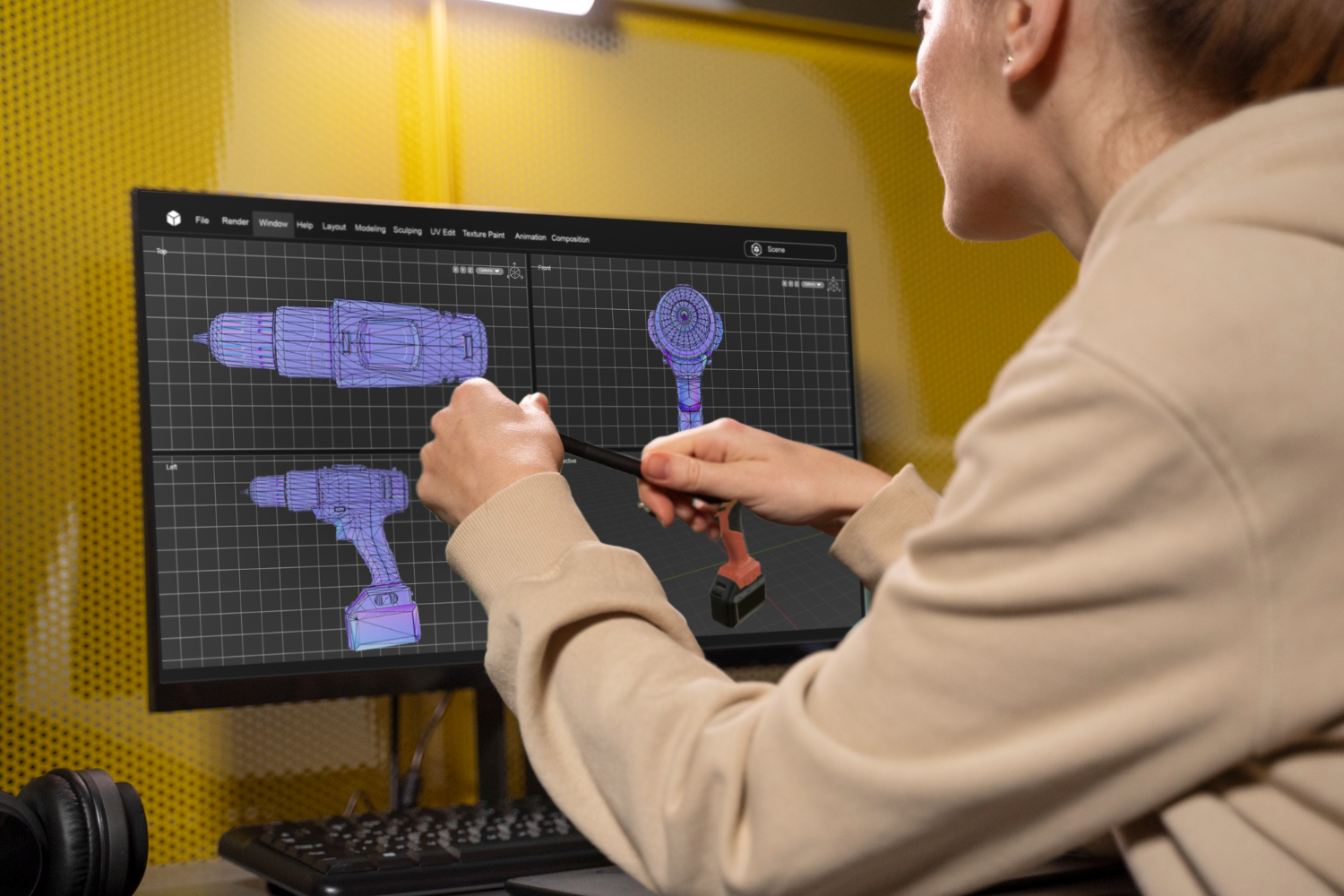
Easel, Inventables’ browser-based CAM software, made CNC routing accessible to a huge number of people who would have otherwise never touched a machine like this: drag a shape in, set a depth, hit carve. That simplicity is also its ceiling. Easel’s own design tools cover basic shapes, text, and simple imported vectors well, but the moment a project needs real precision, parametric dimensions, complex curves, or a design that started life as a technical drawing rather than a doodle, you need a proper CAD program upstream that can export a file Easel can actually import and carve accurately. Picking the right one depends heavily on what you’re actually designing, and the honest answer is rarely “the most powerful option available.”
What Easel actually needs from your CAD file
Before comparing programs, it’s worth understanding what Easel does and doesn’t accept, since this is where a lot of first-time CNC hobbyists get tripped up. Easel imports SVG for 2D vector work and, through its Easel Pro tier, STL for a limited set of 3D carving operations. It does not natively import DXF, despite DXF being one of the most common CAD interchange formats, so any workflow built around DXF export needs an intermediate conversion step, usually through Inkscape, before the file reaches Easel. It also doesn’t understand true 3D solid geometry the way a dedicated CAM program does; Easel’s carving logic is built around 2D profiles, pockets, and a limited relief-carving mode for STL files, not genuine multi-axis 3D machining. Knowing this upfront saves real frustration: a gorgeous 3D solid model from Fusion or SolidWorks won’t just drop into Easel and carve itself, and understanding where that gap sits determines which upstream CAD tool actually makes sense for your workflow.
Autodesk Fusion
Worth noting up front since it trips up anyone searching for old tutorials: Autodesk quietly dropped the “360” from the product’s name in January 2024, rebranding it simply as Autodesk Fusion. The functionality carried over unchanged, so if you see “Fusion 360” referenced in an older guide, that’s the same product under its current name. Fusion combines genuine parametric CAD modeling with an integrated CAM workspace in one application, which means you can design a part and generate CNC toolpaths without ever leaving the program or exporting to a separate CAM tool. Its free Personal Use license remains available for non-commercial hobbyist work, renewable every three years, though Autodesk tightened eligibility for its separate free Startup license back in November 2023, so anyone assuming an old “free for small business” path is still open should check current eligibility directly before planning around it.
For Easel specifically, Fusion’s ability to export both SVG for 2D profile work and STL for relief carving covers both of Easel’s import paths from a single source file, and its parametric constraints mean you can adjust a dimension after the fact without redrawing the whole part, a genuine advantage over Easel’s own simpler shape tools for anything with real precision requirements. The tradeoff is a real learning curve; Fusion’s interface assumes some CAD literacy that a total beginner doesn’t have yet, and its CAM toolpath generation, while powerful, is genuinely overkill if all you need is a simple 2D profile cut for Easel to run.
Inkscape
Inkscape remains the single most useful free tool in this entire list specifically because of the DXF gap mentioned above: it’s the standard bridge for converting DXF files, which Easel can’t read directly, into SVG, which it can. Beyond that conversion role, Inkscape is a genuinely capable vector editor in its own right for 2D CNC work, precise path drawing, text-to-path conversion for engraving projects, boolean operations for combining and cutting shapes, all of which map cleanly onto the kind of flat, profile-based carving Easel handles well. Its extension ecosystem includes plugins specifically built for laser and CNC preparation that clean up paths and optimize them for cutting rather than just screen display.
It has no real 3D capability at all, which is fine given Easel’s own 3D handling is limited, and its interface, while much improved in recent versions, still carries some of the rough edges typical of open-source design software. For anyone doing primarily 2D sign-making, engraving, or profile-cut work destined for Easel, it’s genuinely hard to beat at its price of exactly nothing.
Vectric VCarve
VCarve occupies a specific, valuable niche: unlike Fusion or a pure vector editor, it’s built from the ground up as combined CAD and CAM software specifically for CNC routing, which means its toolpath strategies, V-carving for sign lettering, pocketing, profiling, are tuned for exactly the kind of work a hobbyist router does rather than adapted from general manufacturing CAM logic. Its 2.5D modeling handles relief carving and layered depth work more intuitively than Easel’s own limited 3D tools, and its toolpath simulation lets you preview a carve before committing a piece of actual material to it, catching mistakes that would otherwise mean wasted stock.
Because VCarve generates its own toolpaths natively, most VCarve users run their machine directly from VCarve’s own G-code output rather than routing the design back through Easel at all, which is worth knowing if your actual goal is replacing Easel’s CAM engine rather than just feeding it better source files. For someone specifically wanting VCarve’s design tools while keeping Easel as the CAM and machine-control layer, exporting VCarve’s vector work as SVG still works cleanly. For sign-making, woodworking, and lettering-heavy projects specifically, it’s one of the more purpose-built tools available at any price.
SketchUp
SketchUp’s real strength for this workflow is speed of use for anyone thinking in 3D shapes and volumes rather than 2D profiles, which makes it a natural fit for woodworkers and furniture designers sketching a piece before ever thinking about how it gets cut. Its free web-based tier handles basic modeling, and the paid Pro version adds the export flexibility, DXF and, through plugins, more direct CNC-friendly output, that a hobbyist actually needs for a real CNC workflow. Its enormous library of user-created models and plugins, the 3D Warehouse and the Extension Warehouse respectively, means a huge amount of pre-built geometry and workflow tooling exists that you don’t have to build from scratch.
It’s not purpose-built for CNC the way VCarve is, and getting clean, CNC-ready 2D profiles out of a 3D SketchUp model sometimes takes more manual cleanup than starting directly in a 2D-first tool like Inkscape. For anyone whose actual design process starts in 3D, furniture, architectural elements, dimensional signs, and ends with extracting flat profiles for the router, it remains a genuinely useful starting point despite that extra step.
SOLIDWORKS
Worth flagging a recent naming change here too: as of November 2025, Dassault Systèmes unified SOLIDWORKS’ product naming, and the core CAD offering most people mean when they say “SolidWorks” is now formally branded SOLIDWORKS Design, available in Standard, Professional, and Premium tiers. The underlying software and licensing didn’t fundamentally change, but current documentation and purchasing pages use this updated naming, so don’t be thrown off if a recent quote or tutorial references “SOLIDWORKS Design” rather than the plain “SolidWorks” name older guides use. It remains an industry-standard, professional-grade parametric modeler built for precise mechanical parts, assemblies, and engineering-grade tolerances well beyond what a hobbyist CNC project typically demands.
For Easel-bound work specifically, SOLIDWORKS is genuine overkill unless you’re already using it professionally and just want to route flat profiles or engraving text out to a hobbyist CNC machine on the side. Its DXF and STL export both work cleanly for that purpose, but the licensing cost and learning investment only make sense if the software is earning its keep on real engineering work beyond the CNC hobby project.
LibreCAD
LibreCAD fills a specific gap none of the tools above cover well: free, open-source, genuinely 2D-first CAD with precise dimensional drawing tools built around the same DXF-centric workflow that traditional drafting software uses. For anyone who actually thinks in exact dimensions, drawing to a tolerance rather than eyeballing a shape visually, its precision input tools handle that more naturally than a general vector illustration tool like Inkscape. Its native DXF export, paired with an Inkscape conversion step to get to SVG for Easel, or a direct STL workflow if going through Easel Pro’s 3D path, covers the CNC pipeline reasonably completely at zero cost.
Its interface is genuinely dated and its learning curve reflects traditional CAD conventions rather than the more approachable design of newer tools, which can be a real barrier for someone whose only prior design experience is a consumer illustration app. For hobbyists specifically drawing precise, dimensioned parts rather than freeform artistic shapes, it’s worth the adjustment.
CorelDRAW and Adobe Illustrator
Both of these professional vector tools serve the same role in a CNC workflow: producing clean, precise vector artwork, logos, lettering, decorative patterns, that exports to SVG or DXF for Easel with minimal fuss. CorelDRAW has a particularly strong following among sign-makers and laser or CNC engravers specifically because a meaningful share of that industry standardized on it years ago, and its node-editing tools for cleaning up traced or scanned artwork are genuinely mature. Illustrator brings Adobe’s broader design ecosystem, shared assets, fonts, and integration with Photoshop for raster-to-vector prep work, which matters if CNC output is one piece of a larger design workflow rather than the whole job.
Both are commercial, subscription-based tools that cost real money on an ongoing basis, a genuine consideration against Inkscape’s free equivalent capability for straightforward 2D CNC prep work. For a working designer or sign shop already paying for one of these tools for other client work, using the same tool for CNC-bound vector art avoids learning a separate program just for that one task.
TinkerCAD
TinkerCAD, Autodesk’s free, browser-based, genuinely beginner-friendly 3D modeling tool, was originally built with 3D printing in mind rather than CNC routing, and that heritage shows in its block-based, snap-together modeling approach that’s intentionally simple rather than precise. For an absolute beginner, a student, or a parent working with a kid on a first CNC project, its low barrier to entry is a real, genuine strength that none of the more professional tools above can match. Its STL export feeds Easel Pro’s 3D carving path directly, and simple shapes translate reasonably well into a basic relief carve.
It lacks the precision and control that a woodworker or sign-maker doing serious CNC work will quickly outgrow, and its 3D-print-first design philosophy doesn’t map perfectly onto how CNC routing actually cuts material, subtractive rather than additive, with real constraints around tool access and undercuts that TinkerCAD’s model doesn’t warn you about. As a genuine on-ramp before moving to Fusion, VCarve, or another purpose-built tool, though, it’s hard to beat for getting a total beginner producing something real in their first session.
Understanding toolpaths, feeds, and speeds before you cut real material
Whichever CAD tool produces your design, the actual carving quality depends just as much on the CAM settings that turn that design into toolpaths, and this is genuinely the part beginners underestimate. Feed rate, how fast the bit moves through material, and spindle speed, how fast the bit itself spins, need to be matched to the material you’re cutting, and a rate that works beautifully for soft pine will tear through and chip out on hardwood or crack on acrylic. Bit selection matters just as much as the software: a single-flute upcut bit clears chips well in wood but leaves a rougher edge than a compression bit, which cuts down from the top and up from the bottom to leave clean edges on both faces of a plywood sheet. None of the CAD tools above set these values for you correctly by default; Easel’s own material presets are a genuinely useful starting point for common materials, but any project on a material or bit combination outside those presets benefits from testing a scrap cut before committing good material to an unverified toolpath.
Matching your CAD design to the actual limits of your machine
A design that looks perfectly reasonable on screen can still be physically impossible for a given router to cut, and this gap catches enough beginners that it’s worth designing with real machine constraints in mind rather than discovering them mid-carve. Bit reach limits how deep a single pass can go and how tight an internal corner can be, since a round cutting tool physically can’t produce a perfectly sharp inside corner no matter how the vector art draws it; designers coming from a purely digital background, illustration or 3D printing, routinely draw crisp 90-degree internal corners that a router bit will always round over slightly. Material thickness matters just as directly: a design planned for quarter-inch plywood needs real adjustment before cutting the same file in three-quarter-inch hardwood, since deeper material means more passes, slower feed rates to avoid overheating the bit, and a genuinely different toolpath strategy rather than just scaling the same settings up. Checking your specific machine’s usable cutting area, spindle power, and maximum Z-axis travel against a design’s actual dimensions before finalizing it in CAD saves the frustration of a beautifully designed file that simply won’t fit or can’t be cut on the hardware you actually own.
Choosing based on what you’re actually making
For flat, precise, sign-and-lettering-style work, Inkscape paired with Easel covers the large majority of projects at zero cost, with VCarve as the upgrade path once V-carve lettering and more sophisticated toolpath control become worth paying for. For furniture and dimensional woodworking that starts as a 3D concept before being flattened into cut profiles, SketchUp’s 3D-first approach fits how those projects are actually conceived. For anyone wanting true parametric precision with the option to grow into more advanced part design later, Fusion’s combined CAD and CAM environment, still free for genuine hobbyist use, is worth the steeper learning curve. And for an absolute beginner just getting a machine set up for the first time, starting in TinkerCAD or directly in Easel’s own basic shape tools before reaching for any of the more powerful options above avoids overwhelming a first project with software complexity that isn’t actually necessary yet.
Frequently asked questions
Why won’t my DXF file import into Easel?
Easel doesn’t support DXF import at all; it only accepts SVG for vector work and STL for Easel Pro’s 3D carving path. Any CAD program that exports DXF, SketchUp, LibreCAD, and most traditional CAD tools among them, needs an intermediate conversion step, most commonly opening the DXF in Inkscape and exporting it as SVG, before Easel will accept the file.
Do I need a paid CAD program to get good results with Easel?
No. Inkscape, entirely free, covers the large majority of 2D CNC design work that Easel is actually built to handle, and Autodesk Fusion’s free Personal Use license covers more advanced parametric and 3D work for non-commercial use. Paid tools like VCarve, SOLIDWORKS, CorelDRAW, and Illustrator earn their cost through specialized workflow efficiency or professional feature depth rather than being strictly necessary to produce a good carve.
Can Easel actually cut true 3D models, or just flat profiles?
Easel Pro supports a limited relief-carving mode from imported STL files, which produces genuine depth variation across a surface, but it’s not equivalent to the full multi-axis 3D machining a dedicated CAM program like VCarve or Fusion’s CAM workspace can generate. For anything beyond a straightforward relief carve, true 3D sculptural work with complex undercuts, generating toolpaths in a dedicated CAM tool and running them independently of Easel is the more capable path.
Why does my carve come out different from what I designed?
This is very often a toolpath and material settings problem rather than a design flaw. Bit diameter, feed rate, and depth-per-pass settings that don’t match your actual material and bit will produce chipping, burning, or dimensional inaccuracy even from a perfectly clean design file. Running a small test cut on scrap material with the exact settings you plan to use for the real project catches most of these issues before they show up on a piece of material you actually care about.