Free Real Estate WordPress Themes in 2026

A real estate website has one job that most other business sites don’t: it has to make browsing listings feel effortless. A visitor who lands on a property page wants photos that load fast, a map that actually works, and a way to filter by bedrooms and price without getting lost in menus. The theme underneath the site decides a lot of that experience before a single plugin gets installed, which is why picking the wrong one costs you more than a redesign later. It costs you visitors who leave before they see a single listing.
WordPress has a long list of free themes built around this exact problem, ranging from general-purpose themes flexible enough to handle listings once paired with the right plugin, to purpose-built themes that ship with property fields and search filters out of the box. The list below has been checked against each theme’s current WordPress.org listing rather than repeated from an old roundup, because free real estate themes go stale faster than most categories: a theme that hasn’t been touched in years can carry compatibility problems with a current WordPress install, and two entries that used to show up in these lists no longer belong on one.
What actually matters in a free real estate theme
Attractiveness gets a theme noticed, but it isn’t what keeps a visitor on the page long enough to contact an agent. Customization depth matters more once you’re living with the theme day to day: can you change the header, the property card layout, and the color scheme without touching code. Compatibility with a real estate or directory plugin matters even more, since most free themes handle general page building fine but leave listing management, agent profiles, and advanced search to a separate plugin. Before picking a theme, check whether it ships its own property post type or expects you to bring one, because that decision shapes which plugins will actually work with it later.
A handful of features are worth checking for specifically: advanced search and filtering (price range, bedrooms, location), a page builder or full block editor support so you’re not stuck with rigid templates, front-end submission forms if agents or owners will list their own properties, and at least one demo layout close enough to what you want that you’re customizing rather than building from a blank page.
Search visibility deserves a mention here too, since it’s easy to treat as a plugin-level concern and forget the theme plays a role. A theme that renders clean, semantic markup, proper heading structure, fast image loading, and schema-friendly listing layouts gives search engines an easier time understanding what’s actually on a property page: address, price, photos, description. A theme built around heavy, unoptimized JavaScript or bloated page-builder markup can bury that structure under enough noise that it hurts how the page gets indexed, which matters a lot for a business where most buyers start their search on Google rather than typing in a specific agency’s domain.
Why an outdated theme is a bigger problem here than on most sites
A blog running on a five-year-old theme mostly risks looking dated. A real estate site running on one risks something worse: property galleries that don’t render correctly after a WordPress core update, contact forms that silently stop submitting, and map embeds that break when the mapping library they depend on changes its API. None of that shows up until a prospective buyer hits it, and by then the damage is a lost lead rather than a cosmetic complaint.
This is why two themes that used to show up on lists like this one don’t appear here anymore. Both had gone multiple years without an update, and WordPress.org now flags listings like that directly on the theme page, warning that they may no longer be maintained and may carry compatibility issues with current WordPress versions. That warning exists for a reason: an unmaintained theme doesn’t get security patches either, and a real estate site collecting names, phone numbers, and property inquiries through contact forms is exactly the kind of target where that matters. Every theme below has been checked against its current WordPress.org listing, not carried over from an older version of this article.
Pairing the theme with what actually runs the listings
A theme handles the visual shell: navigation, typography, spacing, how a page loads. The listings themselves, property fields, price, square footage, bedrooms, location, photo galleries, usually come from either a dedicated real estate plugin, a directory plugin, or in some cases fields built into the theme itself. Before settling on a theme, it’s worth knowing which of these three paths you’re on, because switching later means migrating listing data, not just swapping a stylesheet.
If you eventually want IDX or MLS integration, syncing live listings from a regional multiple listing service, confirm early whether your chosen theme or plugin combination supports it, since that’s usually a paid add-on layered on top of a free foundation rather than something bundled for free anywhere in this category. For a site that’s starting smaller, with an agent or small team manually entering their own listings, that complexity isn’t necessary yet, and any of the themes below will handle manual listings without extra plugins.
Free versus premium, and when the upgrade actually pays off
Every theme in this list costs nothing to start with, and for an agent testing whether a dedicated website is even worth the effort, that matters. But it’s worth setting expectations correctly. Free real estate themes generally cover the essentials: a listing display, basic search, agent or company branding, and a reasonably fast, mobile-friendly layout. What they usually don’t include is deep IDX/MLS syncing, advanced lead-routing logic, built-in CRM features, or the kind of dedicated support a paid theme license comes with.
For a solo agent or a small independent brokerage building a first web presence, that gap rarely matters yet. For an established agency already running MLS feeds and juggling dozens of active listings across multiple agents, a premium real estate theme or plugin combination usually pays for itself quickly, since the time saved on manual listing entry and lead management adds up fast once volume gets high enough. The honest advice is to start free, prove out what the site actually needs in practice over a few months, and upgrade the specific piece that’s become a bottleneck rather than buying a premium package speculatively before you know which features you’ll actually use.
1. OceanWP
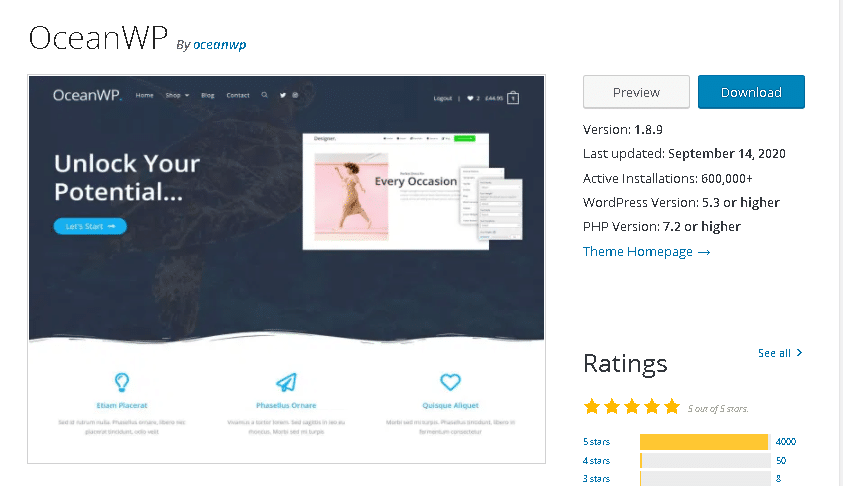
OceanWP isn’t built specifically for real estate, and it’s worth saying that plainly rather than stretching the description to fit. What it is: a lightweight, heavily extendable general-purpose theme with over 500,000 active installs, built-in template options, custom widgets, multiple layouts, and customizable headers, all fast and translation-ready out of the box. That flexibility is exactly why it shows up on real estate builds anyway. Pair it with a directory or listings plugin and OceanWP gets out of the way, letting the plugin define the property fields and search behavior while the theme handles everything else: navigation, typography, page speed.
If you want a real estate site that doesn’t look like every other real estate site on a purpose-built theme, this combination is usually the fastest way there. Read more about it on its WordPress.org listing.
Also read: Best WooCommerce Apps For Your Online Store
2. Real Estate Lite
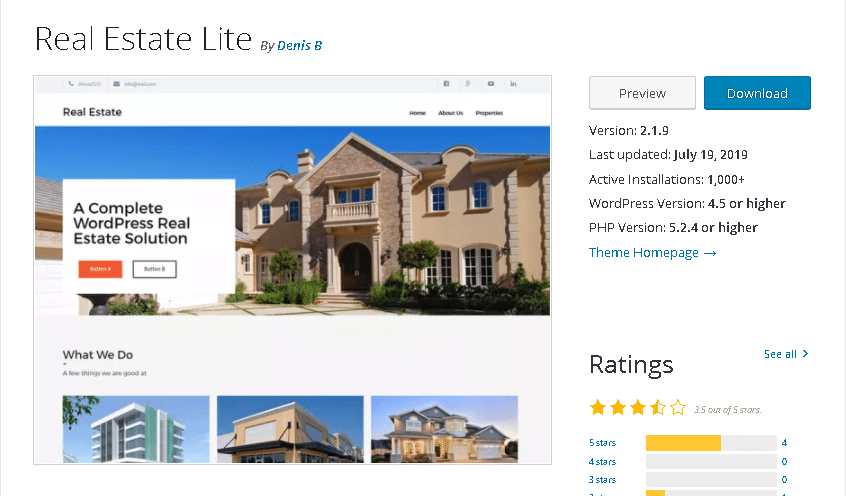
Real Estate Lite is a dedicated WordPress real estate theme that has kept receiving updates rather than sitting untouched, which matters more than it sounds like once you’ve been burned by an abandoned theme before. It gives you a custom logo, header, colors, front page sections, and typography controls, along with slideshow and image gallery options built around showing properties rather than blog posts. It suits small agencies and independent agents who want something that already looks like a real estate site on day one, without a heavy setup process. Details are on its WordPress.org page.
3. Realestate Base
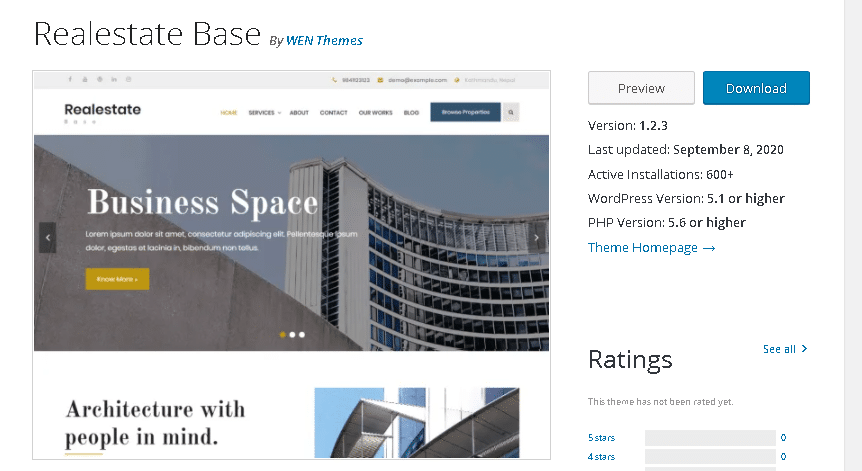
Realestate Base is a clean, current theme (its listing was updated in early 2026) built for real estate agents, brokers, and small businesses adjacent to the industry. Custom widgets and a straightforward setup process get a functional site running quickly, and the visual results stay sharp rather than cluttered, which matters on listing pages where photos need to be the focus rather than compete with decorative chrome. It’s fully responsive, so listings display cleanly whether someone’s browsing from a laptop or scrolling through options on a phone in a parking lot outside an open house. More detail is on its WordPress.org listing.
4. Real Estate Company
Real Estate Company is a newer addition to the free real estate category, and its update history reflects that: the listing has been touched recently rather than left dormant since its first release. Built by TemplateHouse, it targets agencies and brokerages that want a professional, business-like presentation rather than a purely residential-listing feel. It works cleanly with the current block editor, which matters increasingly as WordPress themes move away from older page-builder dependencies. If you want a theme without years of legacy baggage attached, this is one of the more current options in the category. See its WordPress.org page for the full feature list.
5. Residential Real Estate
Residential Real Estate leans further into modern WordPress than most free themes in this space, built with full-site editing and block-editor support baked in rather than bolted on. It comes with several style variations, so you’re not stuck with one visual identity, and its feature set nods toward IDX and CRM-style workflows that agencies with a real pipeline of leads and listings will recognize. If your site needs to look and feel current rather than like a theme ported over from five years ago, this one earns a look. Full details are on its WordPress.org listing.
6. Bee Real Estate
Bee Real Estate is a smaller, newer theme built specifically around showcasing residential listings: clear sections for property details, images, pricing, and location, plus search and filter tools, agent profile sections, and map integration. It supports one-to-four column layouts and full-width templates, so a single-agent site and a small brokerage with several team members can both use it without fighting the default structure. Its recent update history and active support forum suggest the developer is still paying attention to it, which counts for more than a longer feature list on a theme nobody’s maintained in years. It also supports RTL languages out of the box, which is worth checking for specifically if your market includes clients who read right to left, since that support gets bolted on poorly, if at all, on a lot of smaller free themes. Check its WordPress.org page for the current feature set.
Also read: Top WordPress Photography Themes
If you’d rather build listings on top of any theme
Not every real estate site needs a dedicated real estate theme at all. If you already like a general-purpose theme, or you’re running a site that mixes property listings with other content types, a directory plugin can add the listing structure, search filters, and map integration without forcing a theme switch. Listora takes this approach: it’s a free directory plugin with ten listing types (property among them), map search built on OpenStreetMap rather than a paid API key, and front-end submission forms for owners or agents who want to list without going through an admin. It’s a reasonable alternative to committing to a niche theme, especially if the rest of your site has nothing to do with real estate and a dedicated real estate theme would feel like the wrong fit everywhere except the listings page.
What to check before you commit real content to one
Once you’ve narrowed the list to two or three candidates, a short evaluation pass saves a lot of rework later. Install each on a staging site rather than deciding from screenshots alone, since a demo image rarely shows how the theme handles a gallery with fifteen photos or a listing description that runs three paragraphs longer than the demo content. Load a real property page with real-sized images and check how fast it renders, because a real estate site lives or dies on photo quality, and unoptimized image handling in a theme can undo everything a good compression plugin does upstream. A gallery that lazy-loads properly, serves appropriately sized images per device, and doesn’t force a visitor to wait on a dozen full-resolution photos before the page becomes usable is worth more to conversion than almost any other single factor on a listing page.
Check how each theme handles an empty state too, a search that returns zero results, a category page with no listings yet while the site is brand new. It sounds minor until a prospective client lands on a blank page with no explanation during the site’s first weeks, which reads as broken rather than simply new. A theme or plugin combination that shows a clear, friendly message instead of a blank grid handles this transition far better.
Test the mobile layout specifically on a property page rather than the homepage. Buyers browsing listings from a phone, often standing outside the property itself, are one of the highest-intent audiences a real estate site gets, and a theme that only looks polished on desktop is failing exactly the visit that matters most. Check the contact and inquiry forms too, submit a real test entry and confirm it actually arrives, since a theme that looks complete but has a broken or unstyled default form quietly costs leads without ever throwing an error anyone notices.
Choosing between them
If you want a site that already looks like a real estate business the moment you activate the theme, Real Estate Lite, Realestate Base, Real Estate Company, Residential Real Estate, or Bee Real Estate will get you closer to finished with less setup work. If you’d rather build something that doesn’t look templated, start with OceanWP or another flexible general-purpose theme and add listing functionality through a plugin. Either path works. What matters more than the specific choice is checking, before you commit hours to customizing one, that the theme you’ve picked is still being updated. A theme that hasn’t shipped a release in years isn’t just a design risk, it’s a security and compatibility risk on a site where a broken listing page directly costs a client a lead.
Budget matters too, even though every theme on this list is free to start with. A free theme with a paid upgrade path for IDX integration, advanced search, or premium support can end up costing more over a year than a modestly priced premium theme that includes everything from day one. Weigh the free option against where you expect the site to be in twelve months, not just where it is today, before assuming free is automatically the cheaper long-term choice.
Once the theme is in place, the site itself does most of the remaining work: clear photos, accurate details, and a search experience that doesn’t make a visitor hunt for the filter they actually need. Get that right and the theme choice becomes background infrastructure rather than something visitors ever think about, which is exactly where it should sit.
A note on switching later
None of these choices are permanent in the way they can feel at the start. WordPress themes are meant to be swappable, and if listing data lives in a plugin’s own database tables rather than being tightly coupled to theme-specific templates, moving from one theme to another later is mostly a design exercise rather than a data migration. That’s one more argument for the plugin-plus-general-theme path described above: it keeps the listing data portable, so a rebrand or a redesign three years from now doesn’t mean rebuilding every property record from scratch.
If you do go with a dedicated real estate theme instead, export a backup of your listing content periodically regardless, through whatever plugin is managing it, so a future theme change or a plugin update gone wrong doesn’t put years of property data at risk. It’s a five-minute habit that costs nothing until the day it saves the whole site.
Interesting reads: