Best Stock Trading Software Solutions for Your Portfolio in 2026
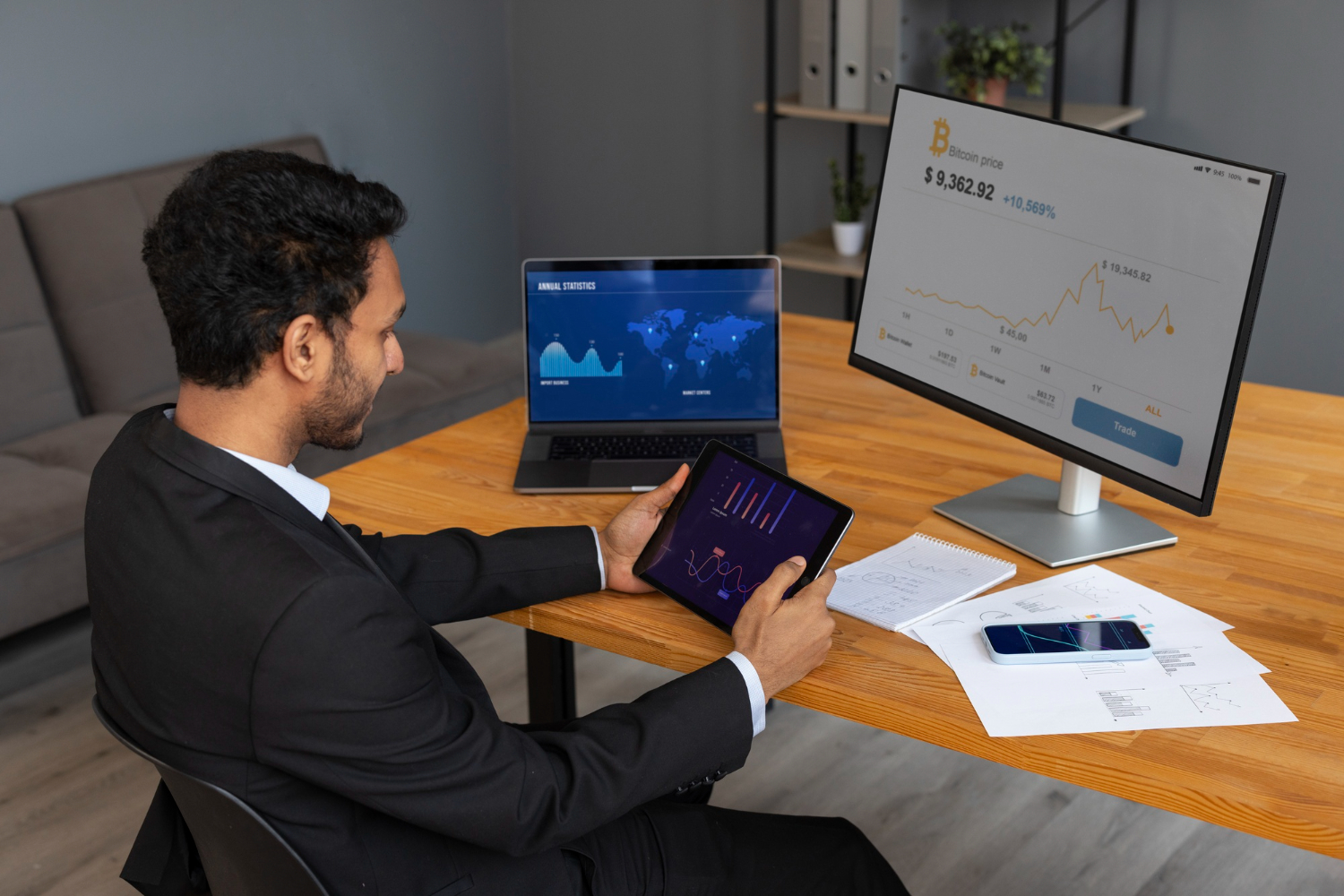
Stock trading software has evolved dramatically over the past few years, with AI-powered analytics, algorithmic order routing, and sophisticated charting tools that used to be reserved for institutional desks now sitting inside apps retail investors carry in their pockets. The best platforms combine solid execution with real research tools, live data, and enough educational depth to help traders at every level make better decisions, not just faster ones.
From commission-free mobile apps built for someone buying their first ten shares to professional-grade desktop platforms built for active day traders running complex options strategies, today’s trading software genuinely spans every investment style. The right pick depends on what you actually do with a trading account, not which app has the flashiest marketing.
What Actually Matters When Comparing Trading Platforms
Commission-free trading is table stakes now, every platform on this list offers it for stocks and ETFs, so it’s no longer a meaningful differentiator on its own. The things that actually separate platforms in 2026 are execution quality (how good the price you get actually is, not just whether the trade goes through), the depth of research and charting tools, how well the platform matches your actual trading frequency and complexity, and how much the mobile and desktop experiences actually agree with each other rather than feeling like two different products wearing the same logo.
Payment for order flow, the practice where brokerages route your orders through market makers who pay for the privilege, remains controversial and worth understanding even though it’s largely invisible to the end user. It doesn’t typically cost casual investors meaningful money, but active traders executing larger or more frequent orders should look at a platform’s execution quality reports (most publish them quarterly) rather than assuming commission-free automatically means cost-free.
Top Stock Trading Software for 2026
1. TD Ameritrade thinkorswim
thinkorswim survived Schwab’s acquisition of TD Ameritrade and remains free for any Schwab customer, which is remarkable given the depth of what it offers. Professional-grade charting with dozens of customizable technical studies, a genuinely useful paper trading simulator for testing strategies without risking real money, and advanced options analysis tools (probability of profit calculators, risk graphs, strategy builders) put it closer to institutional software than anything else available at no cost.
The learning curve is real. thinkorswim’s interface density overwhelms casual investors who just want to buy and hold index funds, and it’s genuinely built for people who trade actively enough to justify learning a complex tool. For anyone serious about options trading or technical analysis, though, there’s no better free option.
2. Interactive Brokers
Interactive Brokers remains the platform of choice for serious active traders and anyone needing access to genuinely global markets, stocks, options, futures, forex, and bonds across dozens of exchanges worldwide, from a single account. Margin rates are consistently the lowest among major brokerages, which matters meaningfully for traders using leverage regularly, and Trader Workstation (TWS) offers order types and algorithmic execution tools that most competitors simply don’t have.
The interface is notoriously unfriendly to beginners, dense menus, a steep learning curve, and a fee structure that until recently required navigating tiered pricing plans. IBKR Lite simplified this with commission-free stock and ETF trades for casual investors, but the platform’s real strength remains serving professional and semi-professional traders who need global market access and low-cost margin.
3. Fidelity Active Trader Pro
Active Trader Pro comes free with any Fidelity brokerage account and delivers advanced trading tools, real-time streaming data, and highly customizable layouts without the added subscription cost some competitors charge for comparable functionality. Its options analytics and backtesting tools have improved significantly, closing much of the gap with thinkorswim, while Fidelity’s broader research offering (analyst reports, fundamental data, screening tools) genuinely outclasses most competitors for investors who care about company fundamentals alongside technical setups.
Execution quality is consistently rated among the best in the industry in independent studies, which matters more than it sounds for frequent traders where small price improvements compound over hundreds of trades annually. For anyone who wants professional-grade tools without leaving Fidelity’s broader ecosystem, it’s a genuinely strong, no-cost option.
4. Robinhood
Robinhood pioneered commission-free trading and still owns the mobile-first, beginner-friendly positioning it built its reputation on, though the platform has matured considerably since its early controversies around order flow transparency and the 2021 meme-stock volatility events. Its interface remains the most approachable on this list, genuinely well-suited to someone making their first stock or crypto trade, and Robinhood Gold adds features like higher interest on uninvested cash, professional research access, and larger instant deposits for a modest monthly fee.
Research depth and advanced charting still trail Fidelity, Schwab, and Interactive Brokers by a wide margin, and options trading tools, while functional, lack the analytical depth serious options traders want. For a first brokerage account or straightforward buy-and-hold investing, Robinhood’s simplicity is a genuine feature rather than a limitation; for anyone trading actively or using complex strategies, it’s worth graduating to a more capable platform.
5. Webull
Webull carved out a middle position between Robinhood’s simplicity and thinkorswim’s density, offering commission-free trading with meaningfully more advanced charting and technical analysis tools than most other mobile-first platforms. Its desktop application provides professional-level indicators, drawing tools, and multi-chart layouts that casual investors rarely need but active swing traders genuinely use.
Paper trading, extended hours access, and a reasonably deep options chain viewer round out a feature set that punches above its weight for a platform with no account minimums and no subscription requirement for core features. Customer support and research depth still trail the larger incumbents, which is the tradeoff for a leaner, more nimble platform.
6. Charles Schwab StreetSmart Edge
StreetSmart Edge is Schwab’s own active trading platform, distinct from thinkorswim (which Schwab retained as a separate product after the TD Ameritrade acquisition), and it fills a middle ground between Active Trader Pro’s polish and thinkorswim’s depth. Customizable dashboards let active traders build layouts around watchlists, real-time charts, and order entry panels arranged exactly how they work, and its idea-generation tools scan for technical setups and options opportunities based on criteria you define.
Since Schwab now owns both thinkorswim and StreetSmart Edge following the TD Ameritrade merger, the two platforms serve overlapping but slightly different audiences internally, thinkorswim skews toward options and futures traders wanting maximum analytical depth, while StreetSmart Edge targets active equity traders who want strong tools without thinkorswim’s steeper learning curve. Both are free for Schwab account holders, so trying both before settling on one costs nothing but time.
7. E*TRADE Power E*TRADE
Power E*TRADE, now under Morgan Stanley’s ownership following the 2020 acquisition, offers a genuinely capable active trading experience with strong options tools, customizable screeners, and a well-regarded mobile app that carries more of the desktop platform’s functionality than most competitors manage. Its options chain analysis and probability calculators are comparable to thinkorswim’s in depth, while the overall interface stays somewhat more approachable for traders who haven’t spent years learning a specific platform’s quirks.
Morgan Stanley’s backing has brought incremental improvements to research access and account integration for clients who hold assets across both platforms, though Power E*TRADE remains a solid standalone choice even for traders with no other Morgan Stanley relationship.
Matching a Platform to How You Actually Trade
Buy-and-hold investors adding to index funds or a handful of individual stocks a few times a month rarely need anything beyond what Fidelity, Schwab, or Robinhood offer for free. The advanced charting and options analytics that define thinkorswim or Interactive Brokers go largely unused by this kind of investor, and the added interface complexity is a real cost with no corresponding benefit.
Active traders, anyone making multiple trades weekly, using technical analysis to time entries and exits, or trading options regularly, get genuine value from thinkorswim’s or Active Trader Pro’s deeper tooling, and the zero added cost (both are free with the respective brokerage account) makes the decision mostly about which broker’s account you’d rather hold your money in. Interactive Brokers pulls ahead specifically for traders who need margin efficiency or access to international markets that domestic-focused brokerages don’t offer.
Options traders specifically should weight platform choice around analytical depth more than any other factor. Probability-of-profit calculators, multi-leg strategy builders, and risk graphs that update in real time as you adjust a hypothetical position separate the platforms genuinely built for options (thinkorswim, Interactive Brokers) from platforms that merely support options trading as a checkbox feature (early-stage Robinhood, most fintech-first apps).
Tax Reporting and Wash Sale Tracking
Active traders generate a genuinely complicated tax situation that most people underestimate until their first year filing with a significant number of trades. Every platform on this list generates a consolidated 1099-B at year-end covering realized gains and losses, but the wash sale rule, which disallows claiming a loss on a security if you buy a substantially identical one within 30 days before or after the sale, gets tracked automatically by the brokerage but only within that single account. Traders holding the same or similar positions across multiple brokerages (say, both Fidelity and Interactive Brokers) need to track wash sales manually across accounts, since no platform’s automatic tracking sees activity happening somewhere else.
This matters more for active traders than it sounds. A trader who sells a losing position at Fidelity and, without realizing the timing conflict, buys back into a similar position at Robinhood within the 30-day window has technically triggered a wash sale that neither platform’s 1099-B will catch on its own, and that gets sorted out (often unfavorably) during tax filing or, worse, in an audit. Traders running meaningfully active strategies across multiple brokerages should strongly consider consolidating to fewer accounts specifically to simplify this tracking, or use a dedicated tax software integration (several of these platforms connect directly to TurboTax and similar tools) that at least imports the transaction-level detail cleanly.
Short-term versus long-term capital gains treatment is the other tax consideration that should influence trading behavior, not just tax filing after the fact. Positions held under a year get taxed at ordinary income rates, which for many traders is meaningfully higher than the long-term capital gains rate applied to positions held over a year. None of the platforms on this list actively discourage short-term trading for tax reasons, obviously, since frequent trading is part of their business model, but it’s worth factoring the tax drag into any strategy that’s borderline on expected returns before committing capital to it.
Choosing Based on Account Type and Investment Goals
Retirement accounts (IRAs, Roth IRAs) available through any of these platforms come with their own constraints worth understanding before choosing where to open one. Options trading in an IRA is typically limited to less risky strategies (covered calls, cash-secured puts) rather than the full range available in a taxable brokerage account, since IRS rules restrict margin and certain leveraged strategies in tax-advantaged accounts. Fidelity and Schwab both offer genuinely strong IRA options with low-cost index fund access alongside active trading tools, making them reasonable single-platform choices for investors who want both a retirement account and an active trading account without splitting assets across brokerages.
For anyone building a long-term portfolio primarily through automatic contributions and rebalancing rather than active trading, the advanced charting and options tools that differentiate thinkorswim or Interactive Brokers from Robinhood become largely irrelevant, and account minimums, fund selection, and expense ratios on any index funds you’re buying matter far more than execution speed or charting depth. It’s worth being honest with yourself about which category you actually fall into before optimizing platform choice around features you’ll rarely touch.
A Note on Risk Before Chasing Advanced Tools
It’s worth saying directly: sophisticated software doesn’t make trading safer, and a probability-of-profit calculator or a beautifully rendered risk graph doesn’t change the underlying math of a losing trade. The platforms with the most advanced tools (thinkorswim, Interactive Brokers) are popular with active and options traders specifically because that population needs the analytical depth, not because the tools themselves generate returns. Anyone drawn to a platform primarily because of its charting capabilities, rather than because they have a specific trading strategy the tools support, is usually better served starting with a simpler platform and a longer time horizon.
Paper trading accounts, available on thinkorswim, Webull, and several other platforms, are worth using seriously rather than skipping. Testing an options strategy or a technical setup with simulated money for a few weeks before committing real capital catches strategy flaws that are far cheaper to discover in a paper account than in a live one.
Related Investment Tools
Stock trading works alongside other investment management tools. Explore personal finance software for comprehensive money management, cryptocurrency tracking tools for digital assets, and AI analytics platforms for market insights.
Frequently Asked Questions
Is commission-free trading actually free, or is there a hidden cost?
Mostly free in the sense that matters for casual investors. Brokerages generate revenue through payment for order flow, interest on uninvested cash balances, and premium subscription tiers, not through commissions on individual trades. Execution quality can vary slightly between brokers as a result, but the difference rarely matters for buy-and-hold investors making occasional trades.
Do I need a paid subscription tier to trade options effectively?
No. thinkorswim and Active Trader Pro both include full options analytics free with a standard brokerage account. Paid tiers like Robinhood Gold add convenience features (research access, higher cash interest) rather than gating core options functionality behind a paywall.
How important is mobile app quality compared to desktop software?
It depends entirely on how you trade. Casual investors checking positions and making occasional trades are well served by any of these platforms’ mobile apps, which are all genuinely capable in 2026. Active traders managing multiple positions or executing time-sensitive strategies should prioritize desktop software (thinkorswim, TWS, Active Trader Pro) where screen real estate and keyboard shortcuts meaningfully speed up execution.
Should I split my trading across multiple platforms or consolidate into one?
Consolidating into one or two platforms is usually the better default, mainly for the tax and wash-sale tracking reasons covered above, and because managing a coherent view of your total portfolio risk gets genuinely harder once positions are scattered across four or five separate apps. The exception is deliberately using a second platform for a specific capability the first lacks, say, keeping a primary account at Fidelity for research and long-term holdings while running an active options strategy through thinkorswim, which is a coherent split rather than fragmentation for its own sake.
Do these platforms support fractional share investing?
Most do now. Robinhood, Fidelity, and Schwab all support fractional shares for stocks and ETFs, which matters for building a diversified portfolio with smaller amounts of capital or for dollar-cost-averaging a fixed amount into an expensive stock. Interactive Brokers and the more trading-focused platforms have historically been slower to add fractional share support, since their core user base skews toward full-share active trading rather than incremental portfolio building.
Conclusion
Stock trading success in 2026 depends more on matching software to your actual trading style than chasing the platform with the most features. thinkorswim and Interactive Brokers lead for advanced and active traders who genuinely use deep analytical tools, Fidelity’s Active Trader Pro and Schwab’s StreetSmart Edge offer comparable depth with strong research ecosystems attached, Power E*TRADE splits the difference for traders who want serious options tools without a steep learning curve, and Robinhood and Webull make investing accessible without overwhelming beginners with complexity they don’t yet need. Choose a platform with the research tools, order types, and asset classes that match your actual strategy, not the one with the longest feature list, and revisit that choice as your trading style evolves rather than quietly outgrowing a platform without noticing.