Circle Review: The Best Community Platform for Creators in 2026

In the past decade, the way creators build businesses has undergone a seismic shift. No longer confined to traditional social media algorithms or third-party platforms, creators today are turning to community-driven models that give them ownership, flexibility, and direct relationships with their audiences. Platforms like Circle have become central to this trend, and in this Circle Review, we explore how it enables creators to monetize content, deliver courses, host events, and nurture a loyal base of supporters without relying solely on likes, shares, or fleeting visibility on crowded feeds. As creators increasingly seek sustainable income and deeper connections, community platforms are emerging as the backbone of the modern creator economy.
Circle as a Leading Platform
Among the platforms at the forefront of this movement is Circle, a community platform that has gained significant traction since its launch. Often praised for its sleek design, ease of use, and versatility, Circle has become a go-to solution for creators, entrepreneurs, and educators who want to build private, branded communities. Whether it’s housing discussions, selling memberships, or hosting live events, Circle positions itself as a one-stop shop for creators who value control and scalability. Over the years, it has been adopted by everyone from solo entrepreneurs to established companies looking to create dedicated spaces outside of mainstream social platforms.
Purpose of This Review
The purpose of this review is to take a closer look at Circle in 2025—its features, pricing structure, advantages, drawbacks, and available alternatives. Community platforms have become increasingly competitive, with new players entering the market and existing ones expanding their offerings. What was groundbreaking in 2020 may feel standard—or even outdated—in 2025. This makes it essential for creators to critically assess whether Circle still delivers the best balance of functionality, affordability, and user experience compared to the growing number of alternatives.
What to Expect
This review will examine Circle’s core features, from community management tools and integrations to monetization options and analytics. It will also explore its pricing tiers, weighing the costs against the value provided for creators at different stages of growth. Beyond features and pricing, we’ll highlight Circle’s strengths—such as its intuitive design and strong engagement tools—as well as its potential limitations, including aspects where it may lag behind competitors. Finally, we’ll look at alternatives like Mighty Networks, Kajabi, and Discord to provide a broader perspective on where Circle stands in today’s landscape.
Central Question
At the heart of this analysis lies a central question: Is Circle still the best choice for creators in 2025? The answer isn’t one-size-fits-all. For some, Circle may remain the ideal blend of simplicity and power, while others may find more value in platforms tailored to their specific needs. By the end of this review, you’ll have a clear understanding of what Circle offers, how it stacks up against its rivals, and whether it’s the right platform to support your creator journey moving forward.

What Is a Circle?
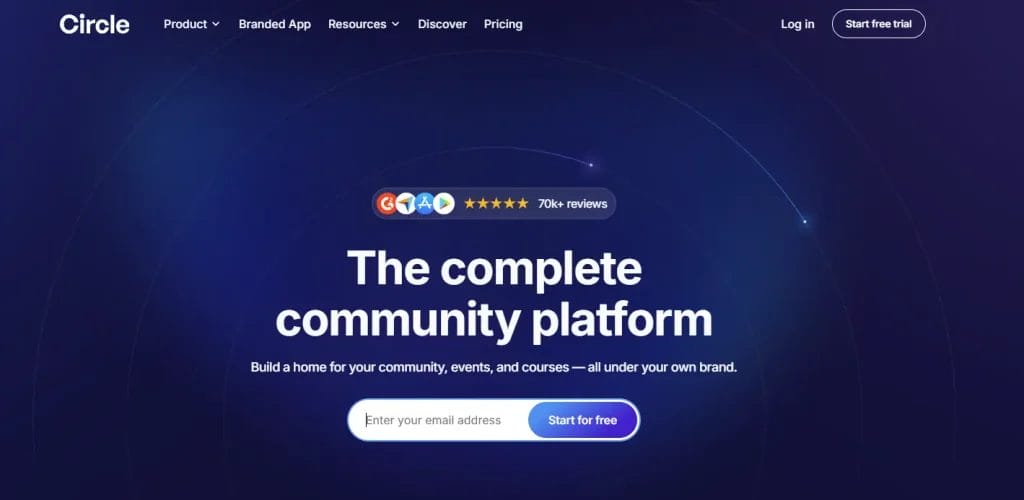
At its core, Circle is a modern community platform designed for creators, entrepreneurs, educators, and businesses that want to build and manage private online spaces. Unlike traditional social networks, Circle emphasizes ownership and branding, allowing creators to design communities that reflect their identity rather than being locked into someone else’s ecosystem. It provides an integrated hub where creators can combine discussions, live events, courses, memberships, and direct communication with their audience—all under one digital roof.
The platform is not just a forum or a group chat; it’s positioned as a complete community infrastructure. Members can interact in topic-based spaces, join live sessions, consume exclusive content, and even pay for subscriptions or course access—all without needing to leave the platform. For creators, this means fewer tools to juggle and more control over how community engagement translates into sustainable income.
Origins and Purpose
Circle was founded in 2019 by a team of entrepreneurs who saw the limitations of existing community tools. At the time, creators often relied on Facebook Groups for interaction, Slack for professional communities, and a mix of other platforms for courses and payments. While each tool served a purpose, they were fragmented, lacked customization, and kept creators dependent on algorithms or environments they couldn’t fully control.
Circle’s mission was to solve this problem by creating a creator-first platform: one that balances community, content, and monetization in a unified system. From the start, it attracted thought leaders, coaches, and entrepreneurs who wanted to foster deeper engagement with their audiences in a distraction-free environment. Over the years, Circle has expanded its features to include live video streaming, course hosting, email campaigns, and advanced analytics—positioning itself as more than a community tool, but as the backbone of many creator businesses.
Positioning for Creators in 2025
By 2025, Circle will have become synonymous with premium, branded communities. It appeals particularly to creators who are serious about building a business around their audience. Unlike free, ad-driven platforms, Circle gives creators full ownership of their content, data, and member relationships. This positioning resonates with professionals who want to escape the volatility of algorithm-driven social media and instead build a predictable, sustainable ecosystem.
For example, an online educator can use Circle to manage student discussions, host live workshops, and offer tiered memberships, all while keeping their branding consistent. A podcaster might use it to create an exclusive community for listeners, offering behind-the-scenes content or premium discussions. A small business can use it to gather customers into a loyalty hub, where engagement translates directly into retention and revenue.
In short, Circle has evolved from being “just a community tool” into a full-service platform for the creator economy.
Comparing Circle to Traditional Tools
To appreciate Circle’s unique positioning, it helps to contrast it with the tools creators have traditionally used:
- Facebook Groups: For many years, Facebook Groups were the default option for building online communities. They are free, easy to set up, and familiar to users. However, they come with major drawbacks: algorithmic feeds that bury posts, constant distractions from unrelated content, and a lack of ownership over member data. Creators have little control, and monetization options are minimal.
- Slack: Originally built for workplace communication, Slack has been repurposed by many communities, especially in tech and professional circles. While it offers fast communication and integrations, it lacks a community-centric design. Discussions often feel transactional, threaded conversations can get messy, and it’s not ideal for long-term engagement or building a brand experience.
Compared to both, Circle stands out by being purpose-built for communities. It provides the structure of topic-based forums, the immediacy of live chats, and the flexibility of courses and events—without the distractions or constraints of traditional platforms. More importantly, it gives creators the ability to monetize directly and maintain full control over their environment.
Why Circle Stands Out Today
The modern creator economy is defined by independence and ownership. Creators are no longer content with building audiences on borrowed platforms where policies can change overnight. They want direct access to their communities, reliable monetization, and tools that scale with their growth. Circle delivers on these needs by combining simplicity with power, positioning itself as a serious alternative to the fragmented patchwork of Facebook Groups, Slack, and third-party course platforms.
This is why Circle continues to capture attention in 2025—it doesn’t just offer community management; it provides a foundation for creator-led businesses to thrive. In the next section, we’ll dive deeper into Circle’s features, breaking down exactly how the platform equips creators to build meaningful, revenue-generating communities.
How Circle Works
Step-by-Step Onboarding
One of Circle’s biggest strengths is its streamlined onboarding process, which helps creators get started quickly without feeling overwhelmed. Signing up begins with creating an account, choosing a community name, and setting up basic branding elements like colors, logos, and a welcome message. Circle guides new users through a step-by-step wizard that introduces the most important functions: creating spaces (discussion areas or content sections), inviting members, and setting access levels.
Creators can define whether spaces are free, paid, or restricted to specific membership tiers. This flexibility allows someone to build a public-facing community while also offering premium or private areas for paying members. Once the foundation is set, inviting members is as simple as sending a link or integrating with email platforms to bulk import existing subscribers.
The onboarding flow also includes tutorials and sample templates, so even creators new to community management can hit the ground running. Within a few hours, it’s possible to go from nothing to a fully functional community hub.
Dashboard and Customization
After setup, creators interact primarily through Circle’s dashboard, which serves as the control center for managing the community. The dashboard provides a clear overview of activity—new posts, member sign-ups, engagement levels, and notifications. Unlike traditional platforms that bury key information in clunky menus, Circle emphasizes simplicity and visibility.
Customization is a major selling point. Creators can brand their community with custom colors, fonts, and imagery to match their existing website or business identity. Spaces can be organized by topics, cohorts, or programs, and each space has its own rules, permissions, and engagement style (e.g., discussion forums, live chat, or content-only areas).
Circle also supports a modular design: creators can drag and drop sections, rearrange spaces, and experiment with layouts to reflect their community’s evolving needs. This level of flexibility makes it possible for communities to feel professional and polished while still being easy to navigate for members.
Engagement Features
Engagement is at the heart of Circle, and the platform provides multiple tools to keep members active and connected. These include:
- Discussions: Structured, topic-based threads allow members to start conversations or respond to others, similar to forums but with a cleaner design.
- Direct Messaging: Members and creators can communicate privately, fostering deeper connections beyond public posts.
- Events: Creators can schedule and host live events directly within Circle, whether it’s a Q&A session, workshop, or networking meet-up.
- Courses and Content Hosting: Circle has built-in functionality for delivering online courses, lesson modules, or exclusive video content. This eliminates the need to juggle separate platforms like Teachable or Thinkific.
- Notifications and Email Digests: Members stay informed with app notifications, emails, or push alerts, reducing the chance of missed updates.
The combination of these features creates an environment where members don’t just consume content but actively engage with it—and with each other.
Integrations That Expand Possibilities
Circle also shines because of its integrations, which extend functionality and make it compatible with the tools creators already use. For instance:
- Zoom: Creators can host live video sessions directly inside Circle, without forcing members to navigate to a separate platform.
- Zapier: This opens the door to thousands of automations, such as syncing Circle with Google Sheets, Mailchimp, or other CRM systems.
- Payment Processors: Circle integrates with Stripe, enabling creators to charge for memberships, courses, or events. Payments are seamless, secure, and customizable with subscription tiers or one-time purchases.
These integrations turn Circle into more than a community platform; they make it a central hub where multiple aspects of a creator’s business come together.
Ease of Use Compared to Other Platforms
Ease of use is often a deal-breaker when it comes to community platforms, and Circle consistently scores well in this area. Its clean, intuitive interface is designed with creators in mind, minimizing the learning curve. While platforms like Slack or Discord prioritize real-time chat (which can quickly feel chaotic), Circle balances immediacy with structure. Conversations remain organized and easy to revisit, which is crucial for long-term engagement.
Compared to Facebook Groups, Circle eliminates distractions from ads, unrelated notifications, or algorithm-driven feeds. Members interact with content because they want to, not because an algorithm decides what they should see. From the creator’s perspective, this means higher-quality engagement and more predictable interactions.
Even when stacked against robust platforms like Mighty Networks or Kajabi, Circle often feels lighter and more approachable. While it may not have every advanced feature those platforms offer, its strength lies in focusing on usability and community-first design. Creators can spend less time managing tech and more time nurturing their audience.
Why This Matters
In the crowded landscape of creator tools, Circle’s ease of use and integration capabilities set it apart. By offering a seamless onboarding process, a customizable dashboard, versatile engagement features, and reliable integrations, it empowers creators to build communities that are both professional and personal. This blend of simplicity and sophistication makes Circle an appealing choice for anyone who wants to launch or scale a creator-led business.
In the next section, we’ll dive deeper into Circle’s pricing, exploring how its costs compare to those of its competitors and whether the value justifies the investment in 2025.
Key Features of Circle in 2025
Circle has evolved significantly since its early days as a simple community platform. By 2025, it will have transformed into a comprehensive creator business ecosystem, offering features that go far beyond discussion forums. Below, we’ll explore its most important features in detail, showing how each contributes to Circle’s positioning as one of the top tools for building and scaling online communities.
Community Spaces: The Foundation of Circle
At the heart of Circle are community spaces, which serve as the central hub for discussions, resources, and member interaction. Think of them as digital “rooms” that can be tailored to different purposes.
- Discussion Boards: Organized, topic-based threads allow members to share ideas, ask questions, and collaborate. Unlike chaotic chat apps, these discussions remain structured and easy to revisit.
- Groups and Sub-Communities: Creators can segment audiences into smaller groups (e.g., mastermind cohorts, program alumni, or membership tiers). This makes personalization simple and keeps engagement meaningful.
- Flexible Permissions: Spaces can be open to everyone, restricted to paying members, or hidden entirely. This flexibility lets creators balance free value with premium exclusivity.
- Custom Branding: Colors, logos, and layouts can be customized so each space aligns with the creator’s brand. Communities feel like an extension of a personal website rather than a generic platform.
Why this matters: Unlike Facebook Groups—where content is buried in a noisy feed—Circle’s spaces are organized, distraction-free, and easy to navigate, giving creators real control over how members experience their community.
Course Creation: Built-In Learning Management
One of Circle’s most powerful upgrades is its course creation feature, which functions like a built-in learning management system (LMS).
- Modular Lesson Design: Creators can organize courses into modules, lessons, and resources, allowing for a more structured approach to learning. Each lesson can include text, video, files, or external links.
- Drip Scheduling: Content can be released over time (e.g., weekly lessons) to keep learners engaged and prevent overwhelm.
- Integrated Discussions: Each course can have its own discussion space, encouraging students to interact with each other and the instructor.
- Certificates and Progress Tracking: By 2025, Circle will include basic certification options and visual progress tracking, which help learners stay motivated.
- Monetization Ready: Courses can be bundled with memberships or sold as standalone products through Stripe integration.
Why this matters: Previously, creators had to rely on separate platforms like Teachable or Thinkific for course delivery. Circle eliminates this need, giving creators one central home for both community interaction and structured learning.
Monetization: Turning Communities into Businesses
Monetization is a cornerstone of the modern creator economy, and Circle provides multiple ways for creators to generate income directly within their community.
- Paid Memberships: Creators can set up recurring subscriptions for access to specific spaces, courses, or events.
- Tiered Pricing: Communities can be segmented into free, standard, and premium tiers, each offering different levels of access and perks.
- One-Time Payments: Perfect for workshops, masterclasses, or standalone courses.
- Stripe Integration: All payments run seamlessly through Stripe, ensuring security and global reach.
- Coupons and Discounts: Creators can run promotions to attract new members or reward loyal fans.
- Analytics for Revenue: Circle’s dashboard tracks earnings, churn rates, and subscription growth, helping creators make informed business decisions.
Why this matters: Unlike Facebook Groups or Discord, which offer little to no direct monetization, Circle bakes revenue generation into the platform, turning engagement into a sustainable business model.
Engagement Tools: Keeping Members Active
Building a community is only half the battle—keeping members engaged is where the real challenge lies. Circle addresses this with a suite of engagement tools.
Events and Live Streams
- Host workshops, Q&A sessions, or networking events.
- Integration with Zoom allows for seamless live video sessions.
- Event reminders and RSVP options keep attendance high.
Polls and Surveys
- Collect feedback from members quickly.
- Use polls to drive discussions or make community-driven decisions.
Direct Messaging
Members can connect one-on-one, fostering networking and deeper relationships.
Email Digests and Notifications
- Weekly digests keep members informed about important posts and events.
- Push notifications help reduce the chance of members going “inactive.”
Gamification Elements (lightweight but growing in 2025)
- Badges, milestones, and recognition for active participation.
- Encourages positive behaviors without overwhelming the user experience.
Why this matters: Many communities die out because engagement fizzles. Circle’s built-in tools give creators multiple ways to keep the momentum going, without needing third-party apps.
Integration Power: Expanding the Ecosystem
Circle doesn’t try to replace every tool; instead, it positions itself as the hub of a creator’s tech stack.
- Email Marketing Platforms: Integrations with ConvertKit, Mailchimp, and ActiveCampaign make it easy to sync community members with email lists.
- CRMs: Through Zapier, Circle connects to tools like HubSpot or Salesforce, helping professional teams manage customer relationships.
- Automation with Zapier: Automate workflows such as sending a welcome email, updating a spreadsheet of new members, or triggering Slack notifications when someone joins.
- Calendar Tools: Sync events with Google Calendar or Outlook for easy scheduling.
- Analytics Integrations: Plug into tools like Google Analytics for deeper insights into user behavior.
- Payment Processors: Stripe remains the backbone of Circle’s monetization, but by 2025, Circle will have also expanded compatibility with other regional payment gateways.
Why this matters: Instead of locking creators into a walled garden, Circle’s integration ecosystem allows them to build flexible workflows and connect with tools they already use. This makes Circle a scalable solution that grows with a creator’s business.
The All-in-One Advantage
When you look at Circle’s feature set in 2025, what stands out is its ability to serve as an all-in-one platform. Instead of piecing together community spaces on Facebook, courses on Teachable, events on Zoom, and payments via PayPal, creators can manage everything in one place.
This not only saves money but also reduces friction for members, who don’t have to jump between platforms. For creators, it means more time spent engaging with their community and less time dealing with tech headaches.
Pricing Structure of Circle
When considering any community platform, pricing is one of the most critical factors. Even the most feature-rich tool must offer a plan that aligns with the creator’s budget and growth stage. In this Circle Review, we’ll break down Circle’s 2025 pricing structure, explore what’s included at each tier, and compare its value against competitors in the market.
Basic Plan: The Starting Point
The Basic plan is Circle’s entry-level tier, designed for small creators or those just beginning their community journey.
What it includes:
- Access to unlimited members and spaces.
- Core community features: discussion boards, direct messaging, and branded customization.
- Basic course hosting and simple event management.
- Integration with Stripe for payments and Zapier for automations.
- Standard email and push notifications.
- Limited analytics (e.g., active members, post activity).
Best suited for:
- Solo entrepreneurs are testing a new idea.
- Coaches or educators with a small but engaged following.
- Hobbyists who want to build a structured, distraction-free community outside of social media.
The Basic plan offers enough tools to build a functioning community, but advanced engagement or analytics are limited. It’s a great low-risk way to start, but serious creators will likely outgrow it as their audience expands.
Professional Plan: The Growth Tier
The Professional plan is Circle’s most popular offering, targeting creators and businesses that are actively monetizing their communities.
What it includes (in addition to Basic):
- Advanced analytics with churn tracking, retention rates, and engagement breakdowns.
- Deeper course creation tools (progress tracking, certifications, drip scheduling).
- Live streaming events and enhanced Zoom integration.
- Advanced customization and branding options.
- Priority support from Circle’s team.
- Expanded automation through Zapier and API access.
Best suited for:
- Mid-size creators building subscription-based businesses.
- Educators offering structured online courses.
- Small businesses or startups are using community as part of their customer experience strategy.
The Professional plan balances affordability and scalability. For most creators, it hits the sweet spot—offering robust monetization tools, data insights, and integrations that are essential for growth.
Enterprise Plan: Full Power for Large-Scale Communities
The Enterprise plan caters to established businesses, organizations, or creators managing very large audiences.
What it includes (in addition to Professional):
- Dedicated account management and personalized onboarding.
- White-label options (removing Circle branding entirely).
- Advanced API access for custom integrations.
- Enhanced security and compliance features (critical for corporate or educational institutions).
- Bulk member management and team admin roles.
- SLA-backed support for reliability.
Best suited for:
- Large educational institutions run multiple programs.
- Established companies building customer communities at scale.
- Influencers or brands with audiences in the tens of thousands.
The Enterprise plan is overkill for most creators, but for organizations where community is central to their business, the investment provides stability, control, and premium support.
Value for Money Compared to Alternatives
When weighing Circle’s pricing, it’s important to compare against the competition. Platforms like Mighty Networks and Kajabi target similar audiences, but their structures differ.
- Mighty Networks: Often cheaper at the entry level, but its interface can feel cluttered, and advanced features (like courses or analytics) are reserved for higher tiers. Circle’s cleaner design and more intuitive user experience give it an edge for professional communities.
- Kajabi: More expensive overall, as it positions itself as a full business suite (including marketing funnels, email automation, and websites). While Kajabi is powerful, many creators find it bloated if community is their main focus. Circle delivers a more streamlined solution at a lower cost.
- Discord/Facebook Groups: Free to use, but they come with major trade-offs—lack of ownership, no direct monetization, and constant distractions. Circle justifies its price by giving creators full control and professional-grade tools.
For creators who are serious about monetizing their audience, Circle offers strong value for money. The Basic plan is affordable enough for newcomers, while the Professional plan gives growing businesses the tools they need without the heavy cost of enterprise platforms like Kajabi.
Why Pricing Matters in 2025
The creator economy in 2025 is far more competitive than it was a few years ago. Creators now expect platforms to deliver not just features, but also predictable, transparent pricing that scales with their needs. Circle’s tiered model allows creators to start small and upgrade as their business grows. This scalability ensures that pricing rarely becomes a roadblock to success.
As this Circle Review shows, the platform isn’t the cheapest option, but it’s priced to reflect its quality. By bundling community management, course delivery, and monetization under one roof, Circle reduces the need for multiple subscriptions—often making it more cost-effective in the long run.
Pros and Cons of Circle
In this part of the Circle Review, we’ll look at what the platform does well and where it falls short.
Pros of Circle
Creator-Focused Design
Circle was designed specifically for creators, coaches, and entrepreneurs. Unlike Slack or Facebook Groups, which were repurposed for community use, Circle’s core architecture supports community growth as a business. Features like branded spaces, customizable permissions, and member segmentation reflect the priorities of creators who want ownership and long-term engagement.
The structure of Circle eliminates distractions common in social platforms. Conversations remain organized and easy to revisit, ensuring members focus on the community itself rather than outside noise.
Monetization Built-In
Monetization tools are built into Circle, with Stripe powering payments for subscriptions and one-time purchases. Creators can:
- Offer tiered memberships.
- Bundle courses with community access.
- Sell standalone workshops or premium content.
- Track revenue, churn, and subscription growth with analytics.
This built-in system means fewer external tools are needed, allowing creators to manage community and income from one platform.
Simple, Modern Interface
Circle’s interface is widely praised for being clean, minimal, and intuitive. Members can join discussions, events, and courses without needing tutorials.
The creator dashboard highlights important data such as engagement levels, revenue, and new sign-ups. Compared to alternatives like Mighty Networks, Circle’s interface balances functionality with simplicity, avoiding clutter while still offering advanced tools.
Flexible Integrations
Circle integrates with the wider creator tech stack. Through Zapier and native connections, it links with email marketing platforms, CRMs, and analytics tools.
- Zoom integration allows seamless live events.
- Email tools like ConvertKit and Mailchimp sync with community data.
- Zapier automations handle repetitive tasks like welcoming new members.
- API access enables more complex custom workflows.
This flexibility makes Circle adaptable to both solo creators and larger teams.
Cons of Circle
Higher Price Compared to Some Competitors
Circle is not the cheapest community platform. While its features justify the investment for many, free options like Facebook Groups and Discord attract beginners who aren’t ready to spend. Even Mighty Networks offers lower-cost entry plans.
For creators without a monetization strategy, the Professional plan in particular can feel expensive.
Learning Curve for Advanced Features
Although Circle is easy to use at a basic level, advanced tools like course hosting, monetization tiers, and automations take time to master.
New creators may need to experiment with templates, test workflows, or rely on tutorials before achieving the setup they want. Larger communities often require moderators or support staff to manage features effectively.
Limited Free Plan Options
Circle does not provide a permanent free plan. Trials and promotions are occasionally available, but ongoing use requires a paid subscription.
Hobbyists or creators testing a new idea may prefer platforms that offer free, unlimited access, even if features are limited. Circle’s paywall makes it more suited for those who already plan to monetize their audience.
Circle in Action: Use Cases
Circle is more than just a platform with features—it’s a tool creators, educators, and businesses actively use to build sustainable ecosystems. Looking at real-world applications shows how Circle delivers value in practice, helping communities grow, monetize, and thrive.
Course Creators
One of the strongest use cases for Circle is among course creators. Many online educators used to rely on Teachable or Thinkific for content delivery while managing discussions in Facebook Groups. This two-platform approach often created friction, forcing students to switch back and forth.
With Circle, course content and community discussion live in the same space. An educator can:
- Organize a curriculum into modules and lessons.
- Host discussions alongside each lesson.
- Use live sessions for Q&A or workshops.
- Monetize through bundled access (course + community).
For example, a digital marketing instructor might sell a six-week program directly in Circle. Students access lessons, join weekly Zoom workshops, and collaborate in group spaces—all while the instructor tracks progress and engagement. The result is higher completion rates and stronger community bonds, which translate into repeat enrollments and referrals.
Coaching Programs
Circle has also become popular with coaching programs, where the need for accountability and peer interaction is critical. Coaches can create private spaces for group cohorts, assign tasks, and run live check-ins without relying on scattered tools.
A life coach, for instance, could structure Circle to include:
- A general community space for all clients.
- Private groups for each coaching cohort.
- Weekly event scheduling for live sessions.
- A resource library with worksheets, guides, and replays.
Because Circle integrates payments, clients subscribe directly through the platform. The coach saves time managing logistics, while clients benefit from having everything—community, calls, and content—organized in one place.
Professional Networks
Circle is not limited to individual creators; professional organizations also use it to power member networks. Unlike Slack, which can feel transactional, Circle supports longer-form discussions, resource sharing, and structured events.
Consider an industry association that wants to build a member hub:
- Discussion spaces for niche topics (e.g., marketing, operations, product design).
- A job board where members post and find opportunities.
- Monthly virtual events and networking meet-ups.
- Exclusive content, such as reports and toolkits, is available to paying members.
By creating this hub on Circle, the association delivers ongoing value to members while reducing reliance on external platforms. The brand maintains ownership of the community experience, and members perceive greater value in their membership dues.
Real-World ROI
The return on investment (ROI) for creators and businesses using Circle often comes down to consolidation and monetization. Instead of paying for separate tools—like a Facebook Group (free but limiting), Slack (community), Teachable (courses), and PayPal (payments)—Circle brings these together in a single subscription. This not only reduces costs but also streamlines workflows.
ROI also appears in engagement metrics. Communities hosted on Circle often see higher participation rates than those on Facebook Groups or Discord because members are not distracted by unrelated feeds. Higher engagement leads to stronger retention, which translates into recurring revenue for subscription models.
Examples of measurable ROI include:
- Course creators reporting completion rates increase by 20–30% when community discussions are tied directly to lessons.
- Coaches are converting one-off clients into long-term subscriptions by offering tiered memberships.
- Professional networks are increasing member retention by centralizing discussions, events, and benefits in a single branded hub.
Circle’s adaptability across industries makes it attractive to a wide range of creators. Whether it’s a solo educator, a coaching collective, or a professional association, the platform provides both the tools and the infrastructure to turn communities into profitable, sustainable ecosystems.
Alternatives to Circle
While Circle is one of the leading platforms for creators in 2025, it’s not the only option. Depending on budget, goals, and the type of community you want to build, other platforms may be a better fit. Below are the top alternatives, each with its strengths and weaknesses.
Mighty Networks – Community + Courses
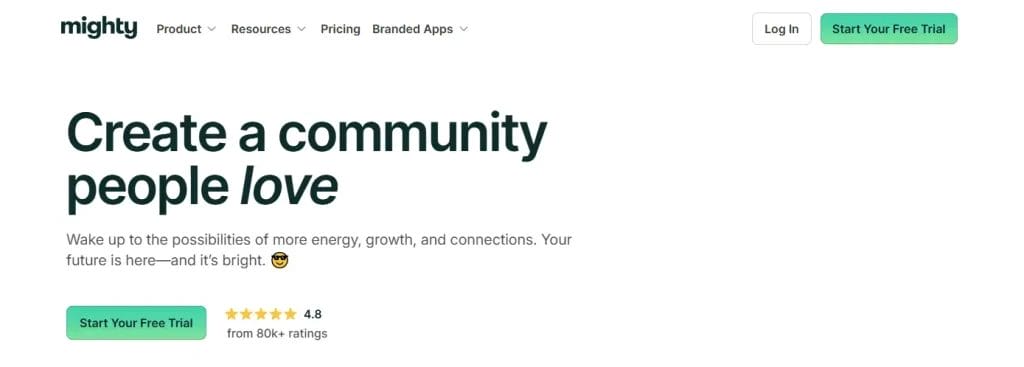
Mighty Networks is often considered Circle’s closest competitor. It offers community spaces, online course creation, and monetization under one roof. Unlike Circle, it leans heavily into blending social networking with learning experiences, making it attractive for creators who prioritize course delivery alongside community engagement.
Pros:
- All-in-one solution: community + courses + events.
- Native mobile app with strong push notifications.
- Built-in payment tools for memberships and courses.
- Supports branded white-label apps (at higher tiers).
Cons:
- Interface can feel cluttered compared to Circle’s clean design.
- Limited customization compared to dedicated learning platforms.
- Higher pricing for advanced features.
Best for: Course creators and educators who want a simple way to merge community and learning into one app.
Discord – Free and Flexible, but Not Professional
Discord started as a gaming chat app but has evolved into a highly flexible community platform. It’s free to use, supports text and voice chat, and allows a high degree of customization with bots and integrations. Many creator communities, particularly in tech and gaming, use Discord to foster real-time conversation.
Pros:
- Completely free for most features.
- Real-time text, audio, and video chat.
- Large library of third-party bots for automation.
- High engagement through instant notifications.
Cons:
- Not designed for professional or business branding.
- Overwhelming interface for new users.
- Lacks native monetization tools (requires third-party solutions like Patreon).
- Harder to organize structured content (e.g., courses).
Best for: Creators who want a low-cost, high-engagement option and whose audiences are already comfortable with Discord’s style of communication.
Kajabi – Powerful but Costly
Kajabi is a heavyweight in the creator economy, positioning itself as an all-in-one business platform. It combines course hosting, email marketing, sales funnels, and community features. Its power lies in consolidation—you can theoretically run your entire digital business on Kajabi.
Pros:
- Robust all-in-one platform for courses, email, sales, and community.
- Advanced marketing automation tools.
- Native checkout and payment options.
- Excellent for scaling with premium pricing strategies.
Cons:
- Expensive compared to Circle and other alternatives.
- Community features are not as strong or engaging as Circle’s.
- Steeper learning curve due to its breadth of tools.
- Overkill for creators who just want a simple community space.
Best for: Established creators and businesses that need a full-stack platform to manage every aspect of their digital presence.
Tribe (Bettermode) – Scalable SaaS Option
Tribe, now known as Bettermode, is a community platform designed for companies rather than individual creators. It offers a modular, API-first approach, enabling businesses to deeply customize and scale communities. It’s often used by SaaS companies, startups, and enterprise brands looking for a branded community hub.
Pros:
- Highly customizable and API-driven.
- Scales well for large communities.
- Strong analytics and member management.
- Professional design suitable for businesses and SaaS platforms.
Cons:
- Less beginner-friendly for solo creators.
- Requires technical setup for advanced customization.
- Pricing geared toward businesses, not individuals.
- Fewer built-in monetization features compared to Circle.
Best for: Startups, SaaS companies, and larger organizations that want a fully branded, scalable solution for community building.
Facebook Groups – Still Relevant but Limited Control
Despite the rise of dedicated platforms, Facebook Groups remain widely used in 2025. They’re free, familiar to most users, and benefit from Facebook’s massive user base. Many creators start here because the barrier to entry is low, though drawbacks emerge as communities grow.
Pros:
- Free to use with virtually no setup required.
- Huge built-in user base—most people already have Facebook accounts.
- Easy to grow organically with Facebook’s discovery features.
- Supports events, polls, and live streams natively.
Cons:
- No ownership—Facebook controls the data, rules, and algorithm.
- Distracting environment with competing ads and feeds.
- Limited customization or branding options.
- Poor long-term monetization support without external tools.
Best for: Beginners who want to test community ideas at no cost, or creators who rely heavily on Facebook’s ecosystem for audience discovery.
Comparing Alternatives at a Glance
| Platform | Strengths | Weaknesses | Best For |
|---|---|---|---|
| Mighty Networks | Courses + community in one place | Cluttered interface, pricier tiers | Educators, course creators |
| Discord | Free, flexible, high engagement | Not professional, lacks monetization | Tech/gaming communities |
| Kajabi | All-in-one business platform | Expensive, steep learning curve | Established businesses |
| Tribe (Bettermode) | Scalable, customizable, API-driven | Complex setup, business pricing | SaaS and enterprise brands |
| Facebook Groups | Free, familiar, large user base | No control, limited branding, distractions | Beginners testing ideas |
How to Choose the Right Community Platform
With so many platforms available in 2025, choosing the right one can feel overwhelming. The best option depends less on which tool is “most popular” and more on aligning features with your goals, budget, and long-term vision. Here are the key factors creators should weigh when making a decision.
Assessing Creator Needs
The first step is identifying the core purpose of your community. Different platforms excel in different areas:
- Courses and Learning: If your business revolves around structured education, look for platforms that combine course delivery with discussion spaces. Circle and Mighty Networks are strong candidates, while Kajabi provides a broader all-in-one system.
- Membership Communities: If your goal is to offer exclusive content or subscription-based access, prioritize tools with native monetization. Circle’s built-in payments and tiered memberships are ideal here, while Discord requires third-party solutions like Patreon.
- Networking and Professional Groups: For communities centered on peer-to-peer networking, you may need features like sub-groups, events, and private messaging. Bettermode is particularly strong for professional networks, whereas Facebook Groups work for casual networking at no cost.
By defining whether your audience needs courses, memberships, or networking opportunities—or a mix—you can narrow your platform choices significantly.
Budget Considerations
Budget often plays a decisive role, especially for creators just starting. Options range from free platforms like Facebook Groups and Discord to premium services like Kajabi.
- Free and Low-Cost Options: Facebook Groups and Discord let you test an idea with no upfront investment, though they limit branding and monetization.
- Mid-Range Options: Circle and Mighty Networks offer professional, creator-friendly environments with monthly fees that align with serious growth ambitions.
- High-End Solutions: Kajabi and Bettermode are best suited for established businesses with the budget to invest in comprehensive or enterprise-level tools.
It’s important to think not only about the immediate cost but also about the platform’s ability to generate revenue. A more expensive tool may pay for itself quickly if it supports monetization effectively.
Growth and Scalability
A platform should support your community as it evolves. What works for a small group today might feel restrictive once you reach thousands of members.
- Small-Scale Communities: Tools like Discord and Facebook Groups allow rapid setup and growth, but can become chaotic as member numbers increase.
- Medium-Scale Growth: Circle and Mighty Networks handle growing communities more smoothly with features like member segmentation, private spaces, and analytics.
- Enterprise-Level Scale: Bettermode is built to scale with advanced APIs and custom integrations, making it ideal for large organizations.
Creators should ask: Does this platform allow me to grow without having to migrate my community later? Migration is often costly in time and energy, so scalability should be part of the initial decision.
Personalization and Branding
Finally, consider how much control you want over the look and feel of your community. Branding not only creates consistency with your broader business but also signals professionalism and ownership.
- Basic Branding: Facebook Groups and Discord allow very limited customization, meaning your community will always live under another company’s identity.
- Moderate Branding: Circle and Mighty Networks let creators customize spaces, colors, and structure while still being part of their ecosystems.
- Advanced Branding: Kajabi and Bettermode go further, offering white-label solutions or fully branded community hubs that blend seamlessly with your website or app.
The more branding control you have, the easier it is to reinforce your identity and create a sense of exclusivity within the community.
Future of Circle in 2025 and Beyond
The creator economy is evolving quickly, and platforms like Circle must adapt to stay relevant. As more creators turn communities into core businesses, Circle is poised to expand its capabilities in ways that reflect broader trends in technology, monetization, and digital culture.
AI-Driven Moderation and Personalization
Artificial intelligence will likely play a bigger role in how communities operate. For moderation, AI can help detect spam, flag inappropriate behavior, and reduce the manual work required from creators and moderators. Personalized content feeds could also ensure that members see the discussions, courses, or events most relevant to them. Instead of one-size-fits-all spaces, Circle may evolve into a platform where every member’s experience feels unique, tailored to their interests and activity.
AI can also improve creator workflows. Predictive analytics may show which members are likely to churn, while smart suggestions could recommend the best time to host events or launch new membership tiers. This kind of personalization will make Circle more powerful as both a community and a business tool.
Expansion of Integrations and Monetization
Integrations are already one of Circle’s strengths, but the future points to even deeper connections with the broader creator tech stack. Expect to see expanded support for CRMs, marketing platforms, and AI-powered tools that automate repetitive tasks. The ability to connect seamlessly with emerging platforms—whether for payments, analytics, or marketing—will make Circle more versatile.
Monetization is also likely to broaden. Beyond subscriptions and course bundles, Circle may add features for microtransactions, tipping, or digital product sales. This would allow creators to diversify income streams while keeping members engaged inside the community. By offering multiple monetization models under one roof, Circle can remain competitive as new platforms challenge its position.
Shaping the Creator Economy
As communities become central to how creators sustain their businesses, Circle is positioned to play a defining role. The shift away from algorithm-dependent social media toward owned platforms is accelerating, and Circle’s design philosophy—prioritizing creators’ control—fits directly into that trend.
Circle’s influence may extend beyond individual creators to professional organizations, schools, and enterprises. If it continues to balance ease of use with advanced functionality, Circle could become the default infrastructure for community-driven businesses.
In 2025 and beyond, the question isn’t just whether Circle can keep up—it’s how much it will lead the direction of the creator economy. With the right blend of AI, integrations, and monetization, Circle is set to remain a cornerstone platform for creators who want to own their audience and build lasting businesses.

Closing Remarks
The Circle Review makes it clear that Circle remains one of the most polished and creator-friendly community platforms in 2025. With its clean design, built-in monetization, and flexible integrations, it provides creators with a professional space to host discussions, deliver courses, and manage memberships all in one place. Unlike free or legacy platforms, Circle was designed with creators at the center, making it easier to build communities that not only engage but also generate sustainable revenue.
That said, Circle isn’t the best fit for everyone. Its pricing—especially at the Professional level—sits higher than some alternatives, and the lack of a permanent free plan makes it less accessible to beginners testing ideas. There’s also a learning curve for advanced features like automations or course structuring, which may challenge creators who prefer plug-and-play simplicity. In contrast, platforms like Facebook Groups or Discord are better for low-cost experimentation, while Kajabi or Mighty Networks may appeal to those seeking broader all-in-one solutions.
Circle is best suited for creators who see their community as a core business asset—course creators, coaches, entrepreneurs, and professional networks looking for a streamlined way to combine engagement with monetization. For this group, the investment often pays for itself quickly through recurring subscriptions, premium courses, or high-value memberships.
In 2025, Circle stands as more than a platform—it’s part of the backbone of the creator economy. By giving creators ownership, scalability, and tools to monetize directly, Circle plays a vital role in shaping how digital communities evolve in the years ahead.
FAQs About Circle in 2025
What is Circle used for?
Circle is a platform for creators, coaches, and businesses to build private, branded communities with discussion spaces, courses, events, and membership monetization.
Is Circle worth the price in 2025?
Yes, for creators monetizing their audience. It combines multiple tools into one platform, saving time and costs. Free alternatives may suit beginners.
Can Circle replace Facebook Groups or Discord?
Yes. Circle offers professional branding, monetization, and structured spaces. Free platforms are better for casual communities.
Does Circle support course creation?
Yes. Courses can be hosted directly in Circle, with lessons, modules, multimedia content, and integrated discussion spaces.
Who should use Circle?
- Course creators
- Coaches with group programs
- Entrepreneurs with paid communities
- Professional networks
Not ideal for casual or experimental communities.
Is Circle beginner-friendly?
Yes, for basic setups like discussions and events. Advanced features like automations and monetization require learning and setup.
What integrations does Circle offer?
- Zoom for live sessions
- Stripe for payments
- Zapier for automation
- Email tools like ConvertKit and Mailchimp
- Analytics platforms
How does Circle compare to Mighty Networks?
- Circle strengths: clean design, flexible integrations, professional feel
- Mighty Networks’ strengths: courses + community bundled, mobile app, white-label options
- Circle weaknesses: higher pricing, no permanent free plan
- Mighty weaknesses: less polished interface, limited integrations
Circle is ideal for creators prioritizing ownership, monetization, and professional presentation. Mighty Networks works for those wanting an all-in-one course + community bundle with a mobile-first approach.
Interesting Reads:
YITH Review: Enhancing Your WordPress Website with Feature-Rich Plugins
WC Vendors Review: Transform Your WordPress Site into a Multi-Vendor Marketplace
Unbiased LearnDash Review: The Ultimate WordPress LMS Plugin