Optimizing Affiliate Revenue: A Strategic Guide to Sales Funnels in 2026

Most affiliates who struggle to earn real commission are not failing because they picked a bad product to promote. They are failing because they are sending every visitor straight to a raw affiliate link and hoping something sticks. A sales funnel fixes that by breaking the path from first contact to purchase into distinct stages, each with its own job, so a visitor who is not ready to buy today does not simply vanish forever. Instead they get nurtured through content, email, and retargeting until they are ready, and the affiliate captures a share of that eventual purchase they would have otherwise lost entirely to a single missed click.
None of this is complicated in theory. What separates affiliates earning real, sustainable income from those chasing scattered one-off commissions is almost always the discipline to actually build and maintain each stage rather than skipping straight to the link and hoping traffic alone does the work.

What a Funnel Actually Does
Here is the structure worth understanding before building anything: a funnel is not a single page or a single email, it is a sequence of touchpoints, each designed to move a stranger a little closer to becoming a paying customer. Skipping stages, sending cold traffic directly to a checkout page with no warm-up, is why so many affiliate campaigns underperform even when the traffic volume looks healthy. The visitor arrives with zero trust and zero context, and asking them to pull out a credit card at that exact moment is asking for far more commitment than the relationship has earned.
Stage One: Awareness
Everything starts with getting in front of someone who has never heard of the product being promoted. Content is the most durable way to do this, blog posts, videos, and social content built around a problem the audience already recognizes rather than around the product itself. A review of budgeting apps ranks and gets shared because it answers a question people are actively searching for, and the affiliate link sits inside that useful content rather than being the entire pitch. Paid advertising can compress the timeline here, putting an offer or piece of content in front of a cold audience through Google or Meta ads, but paid traffic without a warm-up sequence behind it tends to convert far worse than organic content that has already built some context and trust before the affiliate link ever appears.
The mistake affiliates make most often at this stage is producing content that reads as an advertisement rather than as something genuinely useful on its own. A visitor who senses they are being sold to from the first sentence disengages immediately, while content that actually helps them solve a problem, even before mentioning the product, earns enough goodwill that the eventual recommendation lands as advice rather than as a pitch.
Stage Two: Interest and Evaluation
Once someone clicks through, where they land matters enormously. A dedicated landing page that expands on the offer, spells out concrete benefits, and includes real testimonials or case studies converts at a meaningfully higher rate than sending traffic directly to a generic product page the affiliate does not control. Control over the landing experience lets the affiliate reinforce exactly the argument that got the visitor to click in the first place, rather than dropping them into a page built for a completely different audience.
Email opt-ins earn their place here specifically because most visitors are not ready to buy on a first visit, and without capturing an email address that visitor is gone the moment they close the tab. Offering something genuinely useful in exchange, a short guide, a comparison sheet, a free trial, gives someone a reason to hand over their email that has nothing to do with an immediate purchase decision, which lowers the barrier to opting in considerably compared to a bare “subscribe to our newsletter” form.
Also Read: Top Creative Community Engagement Strategies
Stage Three: Decision
This is where most of the actual persuasion happens, and it happens through repeated contact rather than a single message. A well-built email sequence nurtures a lead over several days or weeks, answering the objections a buyer is likely to have, sharing more detailed information than a landing page can hold, and building the kind of familiarity that makes someone comfortable clicking “buy” when the moment finally comes. Sending one generic email and expecting a purchase decision from it treats the funnel as a single event instead of a relationship being built incrementally.
Retargeting campaigns catch the visitors who read the landing page, maybe even opened an email, and still did not convert. These are not cold visitors anymore, they have already shown real interest, and a retargeting ad reminding them of the offer, sometimes paired with an added incentive like a limited-time bonus, recovers a share of that interest that would otherwise be lost the moment the browser tab closed.
Stage Four: Action and Beyond
The final click through the affiliate link to checkout is the moment everything before it was building toward, and it is also where a surprising amount of otherwise-successful funnels lose conversions unnecessarily. A checkout process with unclear pricing, a confusing multi-step flow, or a broken redirect kills a sale that the entire funnel worked to earn. Affiliates rarely control the merchant’s checkout page directly, but choosing to promote merchants with a genuinely smooth purchase flow, rather than the highest commission rate alone, tends to pay off in higher realized conversion even if the headline commission percentage is lower.
The funnel does not end at the sale. Following up after a purchase with a thank-you message, a request for a review, or a related product recommendation keeps the relationship alive rather than treating the customer as a closed transaction. A customer who trusted one recommendation enough to buy is often receptive to a second one down the line, and that repeat relationship is worth far more over time than the value of any single commission.
Also Read: 8 Best WordPress theme check
Strategies That Separate Successful Funnels From Weak Ones
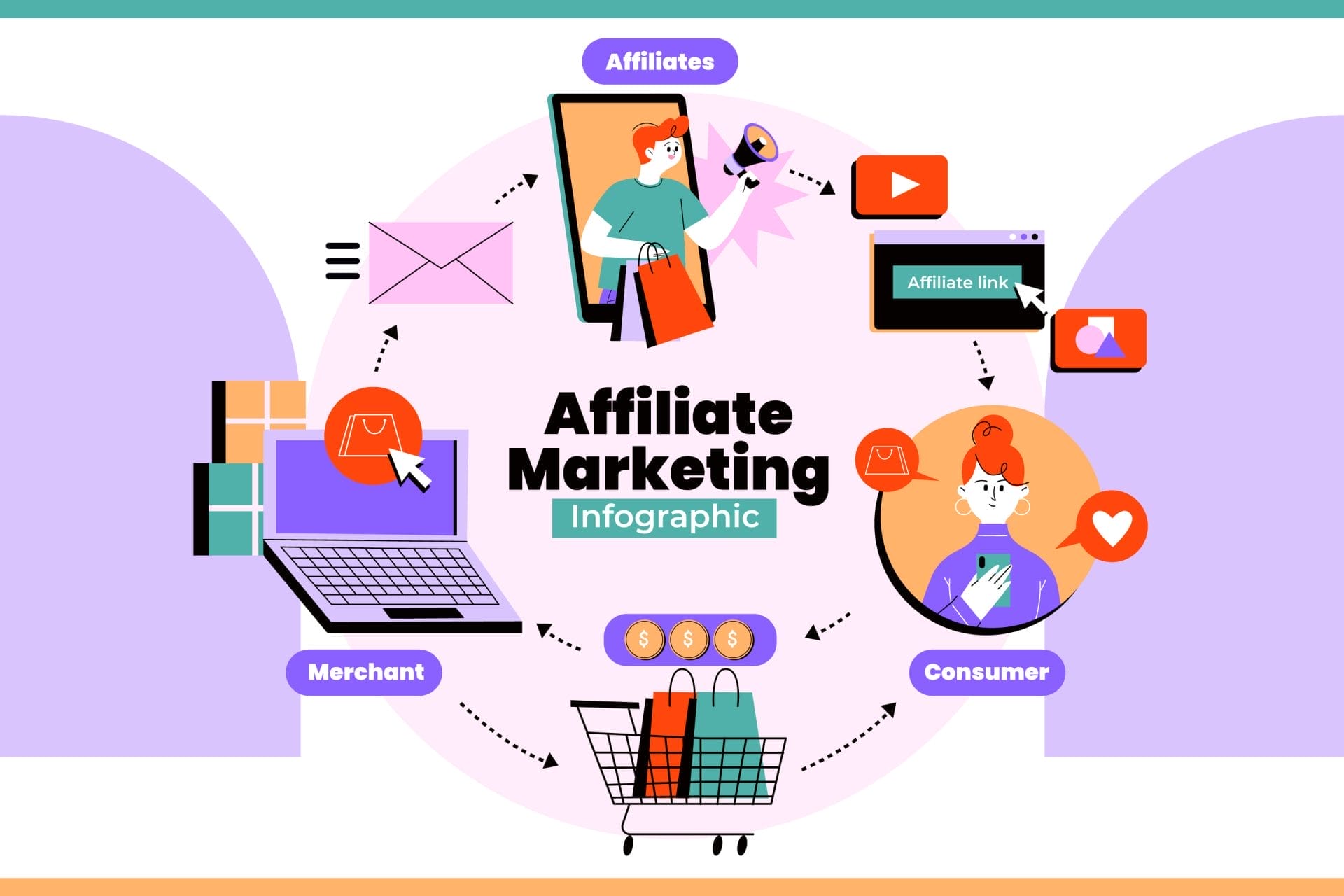
Understanding the audience deeply enough to anticipate their objections before they voice them separates affiliates who consistently convert from those chasing volume without a clear read on who they are actually talking to. This is not abstract marketing theory, it shows up in concrete decisions: which pain point to lead with in the first piece of content, which specific benefit to highlight on the landing page, which objection to address first in the email sequence. Affiliates who guess at this instead of genuinely knowing their audience end up building funnels that read as generic, and generic funnels convert at generic, unremarkable rates.
Choosing which offers to promote deserves more scrutiny than most affiliates give it. A high commission rate on a mediocre product produces short-term revenue and long-term damage to an audience’s trust, since a recommendation that turns out to be a poor fit for the buyer erodes the credibility every future recommendation depends on. Relevance to the specific audience and genuine product quality matter more over a full year of promotion than a few extra percentage points of commission on any single sale.
Testing and optimization is where funnels actually improve after the initial build, and it is the step most affiliates skip entirely once a funnel is live. Every stage, the headline on the landing page, the subject line on the first email, the specific retargeting ad copy, can be tested against a variant, and the funnels that compound in performance over time are the ones where this testing happens continuously rather than once at launch and never again. A funnel built once and left untouched slowly decays in performance as audience behavior, ad platforms, and competing offers all shift underneath it.
Building real relationships with an audience, rather than treating every interaction as a transaction to be optimized, is what makes an affiliate’s recommendations carry weight in the first place. Being transparent about affiliate relationships rather than hiding them, and consistently recommending only products the affiliate genuinely stands behind, builds the kind of long-term trust that makes every future funnel convert better than it otherwise would, because the audience has learned the recommendations are reliable.
Also Read: 10 Best WordPress Themes For Authors
Common Mistakes That Quietly Kill Conversion
Overloading the awareness stage with the affiliate pitch too early is the single most common mistake, and it is often invisible to the affiliate making it because the content still technically covers the topic it promises to. A “best budgeting apps” article that spends three sentences on genuine comparison and then pivots hard into a sales pitch for one specific app reads as an advertisement wearing a thin disguise, and readers who have seen enough content online recognize that pattern instantly. The fix is not avoiding the recommendation, it is earning it through enough genuine, useful comparison first that the eventual recommendation feels like the natural conclusion of honest research rather than the entire point of the article from the first paragraph.
Neglecting mobile experience across the funnel is another quiet killer, particularly for anything a visitor might discover through a social media link. A landing page that renders beautifully on desktop but breaks or loads slowly on a phone loses a huge share of traffic that never gets seen anywhere in the analytics, since a visitor who cannot use the page simply leaves without generating any trackable signal beyond a fast bounce. Testing every stage of a funnel specifically on a phone, not just resizing a desktop browser window, catches problems that would otherwise silently cap conversion rates without an obvious cause.
Sending every lead through an identical email sequence regardless of how they entered the funnel wastes the context that was available at the point of opt-in. Someone who opted in after reading a detailed comparison article already knows more and needs less basic education than someone who opted in from a broad social ad, and treating both the same way either bores the informed lead with information they already have or overwhelms the less-informed one with details before they are ready.
Where Most Funnels Actually Break
The awareness-to-interest transition is where the largest share of potential traffic gets lost, since only a fraction of anyone who sees a piece of content or an ad ever clicks through at all. Improving that click-through rate through sharper headlines and a clearer value proposition in the initial content has an outsized effect on everything downstream, since even a small improvement at the top of the funnel compounds through every later stage. The interest-to-decision transition is the second major leak point, where a visitor who showed enough interest to land on a page or opt in still fails to move forward, usually because the landing page or the first email failed to build enough trust or urgency to keep them engaged.
Cart abandonment at the action stage is the most visible leak because it happens right at the finish line, after all the earlier work has already been done to get someone that close to a purchase. This is also the stage most affiliates have the least direct control over, since the checkout experience belongs to the merchant rather than the affiliate. What an affiliate can control is choosing merchants known for smooth checkout experiences and, where the affiliate program allows it, using retargeting specifically aimed at cart abandoners rather than lumping them in with general retargeting audiences that never showed that same level of purchase intent.
Measuring What Matters at Each Stage
Tracking a single conversion rate for the entire funnel hides exactly where the problem lives when performance dips. A funnel converting poorly overall could be losing people at the very first click, could be gathering plenty of interest but failing to nurture leads through email, or could be doing everything right until checkout and losing sales purely to a clunky payment process on the merchant’s end. Breaking performance down by stage, click-through rate on the initial content, opt-in rate on the landing page, open and click rates through the email sequence, and final conversion rate at checkout, turns a vague sense that “the funnel isn’t working” into a specific, fixable problem.
Benchmarking against past performance matters more than chasing arbitrary industry averages, since audience size, niche, and traffic source all shift what a “good” number actually looks like for any individual affiliate. A funnel converting at three percent might be excellent for a cold, broad audience and mediocre for a highly targeted, warm email list. The useful comparison is always against that same funnel’s own prior performance, watching for the trend line rather than fixating on hitting some number pulled from a generic marketing blog post.
Picking the Right Funnel Length for the Offer
Not every product deserves the same number of stages or the same nurture timeline. A low-cost, impulse-friendly product, a cheap gadget, a simple subscription under ten dollars a month, often converts fine off a short funnel: one piece of content, one landing page, maybe two follow-up emails. Forcing that same offer through a six-week nurture sequence wastes time and risks losing the visitor’s interest before the ask even arrives. A high-ticket or genuinely complex product, enterprise software, a course costing several hundred dollars, a financial service, needs the opposite treatment. Buyers considering a significant purchase want more proof, more social validation, and more time to convince themselves, and rushing that decision with a short, aggressive funnel tends to produce refunds and chargebacks rather than confident buyers.
Matching funnel length to the actual weight of the purchase decision is one of the more overlooked skills in affiliate marketing. Affiliates who default to the same funnel template regardless of what they are promoting leave conversions on the table in both directions, either annoying impulse buyers with unnecessary friction or under-nurturing considered purchases that needed more time to close.
Tools That Make Funnel Building Practical
None of this requires custom development work. Landing page builders handle the interest-stage page without needing a developer for every new offer. Email marketing platforms handle the sequencing and segmentation that used to require manually tracking who received which message and when. Retargeting pixels from Meta and Google, once installed correctly across the funnel’s pages, handle the re-engagement stage automatically in the background, building an audience of people who visited without needing anyone to manually maintain a list.
The main technical requirement most affiliates underestimate is proper tracking. Without knowing which piece of content, which specific ad, or which email actually drove a conversion, optimization becomes guesswork rather than a data-driven process. Setting up conversion tracking correctly from the very first campaign, rather than retrofitting it after months of unattributed traffic, saves a significant amount of wasted testing later once real optimization decisions need to be made.
The Bottom Line
Affiliate marketing sales funnels work because they respect how people actually make purchase decisions: gradually, with growing trust, rarely on the first exposure to an offer. Building each stage deliberately, awareness content that genuinely helps before it sells, a landing page that reinforces the click that got someone there, an email sequence that nurtures rather than pitches once, and a checkout experience that does not introduce friction at the last moment, is what separates affiliates earning consistent commission from those chasing one-off clicks that rarely convert. None of it works as a set-and-forget system. The funnels that keep performing are the ones getting tested, measured, and refined continuously, because audience behavior and the competitive landscape around any given offer never stay still for long.
The affiliates who treat this as a genuine discipline rather than a set of tricks tend to build something that compounds year over year: an audience that trusts them, a library of tested funnels that keep converting with minor tuning, and a reputation that makes the next product recommendation land easier than the last one did. That compounding effect is the real payoff of building funnels properly the first time, rather than chasing whatever traffic tactic happens to be trending this month.
Interesting Reads:
AWeber Alternatives: Finding the Perfect Email Marketing Tool for Your Business
Shopify vs Shopify Plus: Choosing the Right Plan for Your E-commerce Business