6 Reasons Why Digital Marketing for Nonprofits is Important in 2026
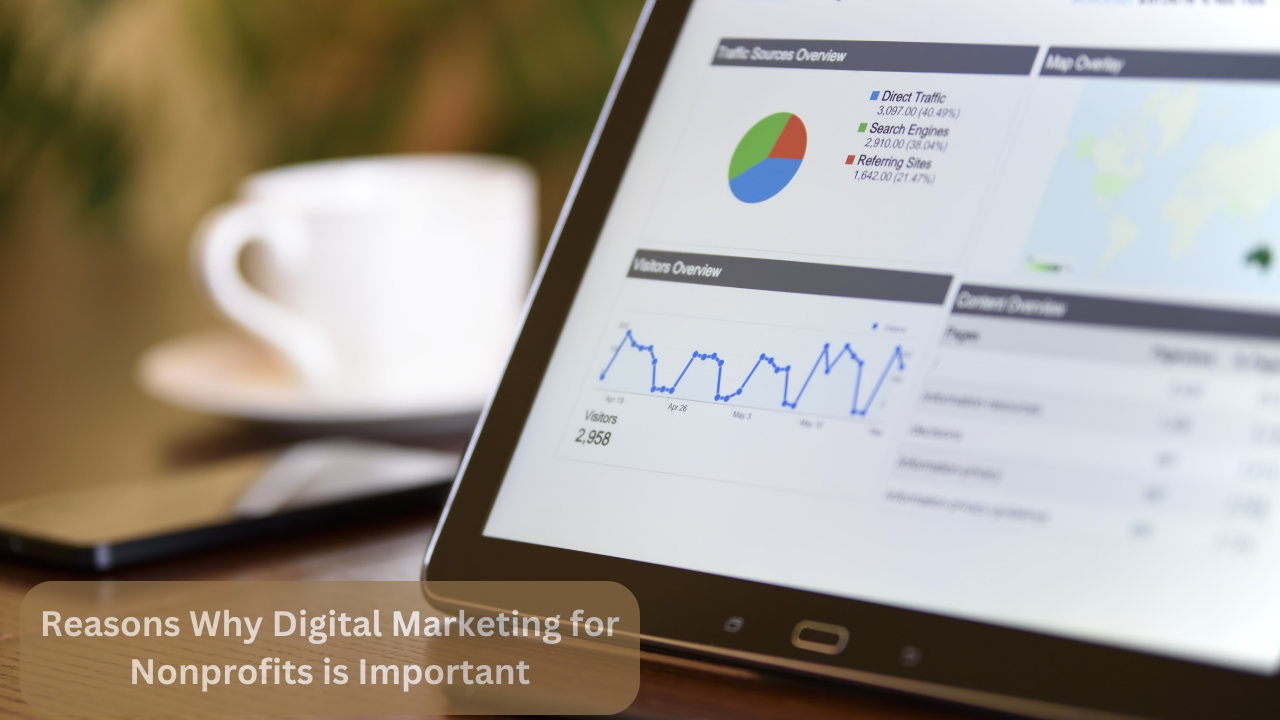
Nonprofits have always depended on the generosity of individuals and organizations willing to support their mission, but how that support gets found, cultivated, and sustained has changed considerably. Traditional fundraising channels, direct mail, in-person events, cold phone calls, still have a place, but they no longer carry the reach or cost-efficiency they once did on their own. Digital marketing has opened new ways for nonprofits to reach supporters, tell their story to people who would never encounter a mailer, and build relationships that turn a one-time donor into a sustained advocate for the cause.
That shift matters more for resource-constrained organizations than it does for large commercial businesses. A nonprofit rarely has a marketing department the size of a corporate brand, which makes it especially important to focus effort on channels that actually produce a return rather than spreading thin across everything at once. This guide covers six specific reasons digital marketing deserves a real place in a nonprofit’s strategy, along with practical detail on how to execute each one well.
None of these six areas requires a large budget to start meaningfully. Several of the most impactful improvements, tightening a donation form, writing a more specific email subject line, adding a clear call to action, cost nothing beyond staff time and a willingness to test and adjust based on what the data actually shows rather than assumptions about what should work.
1. Email Marketing: The Highest-Return Channel Most Nonprofits Underuse
Email remains one of the most cost-efficient tools available to a nonprofit, and it is frequently underused relative to how well it actually performs. Unlike social media reach, which platforms can throttle unpredictably, an email list is a channel you fully own and control. The people on it have already opted in, which means they are meaningfully more receptive than a cold audience encountering your organization for the first time.
The quality of the email itself matters more than the platform sending it. Long, dense paragraphs and generic stock photography tend to lose readers quickly. Concise, specific messaging that ties directly to a real outcome, a family housed, a meal provided, a specific number of people reached, performs consistently better than vague appeals to a broad mission statement. Most nonprofits rely on a dedicated email marketing platform such as Mailchimp, Constant Contact, or a nonprofit-specific CRM with built-in email tools, since these handle list segmentation, automated sequences, and deliverability far better than sending individually from a personal inbox.
A clear call to action is the single most commonly missing element in nonprofit email campaigns. Every email should ask for something specific: donate, volunteer, register for an event, or share the message with others. It is surprisingly common for well-written, emotionally resonant emails to end without any explicit next step, leaving an engaged reader with nowhere obvious to direct that engagement.
2. Social Media: Building Community, Not Just Broadcasting
Social media platforms have fundamentally changed how people discover and connect with causes they care about. For nonprofits specifically, the value goes beyond simple visibility, it is the ability to build a genuine community of supporters who see themselves as part of the organization’s work rather than passive observers of it.
Establishing a consistent presence across the platforms where your specific audience actually spends time, rather than every platform simultaneously, tends to produce better results than a thin presence spread across too many channels. Sharing campaign updates, behind-the-scenes content, and direct stories from the people your organization serves builds a more authentic connection than polished, campaign-style posts alone. Adding social sharing buttons to your website and email campaigns makes it easy for supporters to spread your message to their own networks with minimal friction.
Engagement is where most of the actual value sits. Responding to comments, sharing content that supporters themselves create, and participating in genuine back-and-forth conversation signals that there are real people behind the account, which meaningfully increases the odds that a follower becomes a repeat donor rather than a passive follower who never converts into support.
3. Streamlined Donation Pages: Removing Every Point of Friction
A donation page with too many steps, too much text, or a confusing form loses donors at every stage of the process. The goal is making a donation as close to effortless as any modern ecommerce checkout, since donors increasingly compare the experience against the fastest, simplest online purchases they make elsewhere, whether they consciously realize it or not.
Offering a recurring donation option specifically matters here. A smaller monthly commitment often feels more manageable to a donor than a single larger one-time gift, and recurring donations give your organization a more predictable revenue base to plan around rather than relying entirely on unpredictable one-time campaigns. Making it simple for a donor to share your donation page directly, through built-in social sharing on the page itself, extends your reach through the most trusted possible channel: a personal recommendation from someone the recipient already knows.
Test your own donation flow regularly from a fresh browser, ideally on a phone, since a large share of donation traffic now arrives on mobile. A form that looks fine on a desktop screen sometimes breaks down or becomes frustrating on a smaller screen, quietly costing donations that never get reported as a specific problem because the donor simply gives up and leaves.
4. Compelling Content: Earning Attention Through Genuine Storytelling
In a crowded information environment, generic appeals rarely cut through. Nonprofits that consistently publish specific, well-told stories about the people and communities they serve build credibility that a generic mission statement alone cannot. This content, articles, short videos, infographics, photo essays, should establish your organization as a genuine, trustworthy source of information about the problem you address, not just an organization asking for money.
Investing in quality matters more than volume here. A smaller number of well-produced, carefully edited pieces published consistently tends to outperform a high volume of rushed, lower-quality content. Strong visual storytelling, real photos of your actual programs and the people they serve rather than generic stock imagery, consistently outperforms text-heavy appeals in both engagement and eventual conversion to donation.
Mobile optimization is no longer optional for any of this content. A growing majority of nonprofit website traffic and email opens now happen on phones and tablets, and content that displays awkwardly on a smaller screen loses readers before the message even lands.
5. Cultivating Relationships: Turning One-Time Donors Into Long-Term Supporters
Acquiring a first-time donor is expensive relative to retaining an existing one, which makes relationship building one of the most cost-effective activities a resource-constrained nonprofit can invest in. Acknowledging every single donation, even small ones, and expressing genuine gratitude directly correlates with whether that donor gives again.
Automated thank-you sequences reduce the manual workload of acknowledging every gift individually while still ensuring every donor receives a timely, personal-feeling response rather than silence. This does not mean automation should feel robotic, a well-written automated sequence, personalized with the donor’s name and gift amount or purpose, still reads as genuine even though it is not manually typed each time.
Encourage supporters to share their giving on social media if they are comfortable doing so. Many donors are genuinely willing to publicly share that they supported a cause, which both validates their own decision publicly and introduces your organization to their network at essentially no cost to you. Make this easy with pre-written shareable content or simple social templates rather than expecting donors to craft their own post from scratch.
6. Optimizing Your Website: The Digital Front Door to Your Organization
Your website is often the first, and sometimes only, interaction a potential donor or volunteer has with your organization before deciding whether to engage further. A confusing navigation structure, slow load times, or an unclear path to donating or getting involved costs you support that would otherwise have converted.
Thoughtfully placed pop-ups, used sparingly, can capture visitor contact information and grow your newsletter list without becoming intrusive enough to drive visitors away. The balance matters considerably here: a single, well-timed prompt asking for an email address in exchange for a genuine update tends to convert reasonably well, while aggressive, repeated pop-ups tend to push visitors to leave the site entirely before ever engaging with your actual content.
Beyond pop-ups, a genuinely useful website for a nonprofit needs a few basics handled well: a clear, prominent donation button visible from every page, an easy way to find information about your programs and impact, and a mobile experience that works as smoothly as the desktop version, since a meaningful share of your traffic will arrive from a phone regardless of how your website was originally designed.
Measuring Whether These Efforts Are Actually Working
Digital marketing without any measurement is just activity, not strategy. A few metrics worth tracking consistently across these six areas: email open and click-through rates, donation page conversion rate (the percentage of visitors who actually complete a donation), social media engagement relative to follower count rather than raw follower count alone, and donor retention rate year over year.
Retention rate deserves particular attention, since it is the metric most directly tied to long-term sustainability. A nonprofit that consistently retains a high percentage of its donors year to year needs to acquire fewer new donors just to maintain the same level of funding, which is both cheaper and more stable than a strategy that depends heavily on constant new donor acquisition to offset high turnover.
Common Mistakes That Undercut These Efforts
Treating every channel as a broadcast, not a conversation
The most common mistake across email, social media, and website content alike is talking at supporters rather than with them. Organizations that consistently respond to comments, answer questions genuinely, and acknowledge feedback build noticeably deeper loyalty than ones that publish content and move on without engaging further.
Inconsistent branding and messaging across channels
When your email, social media, and website tell a slightly different version of your story, or use inconsistent visuals and tone, it subtly undermines the sense of a cohesive, trustworthy organization. This does not require an expensive rebrand, just a shared understanding across whoever manages each channel of the core messages and visual identity to maintain.
Asking for money without first offering value
An email or social post that only ever asks for a donation, with no updates on impact, no stories, no genuine content in between asks, trains your audience to tune you out. A healthier rhythm mixes genuine, non-asking content with clear, well-timed donation requests rather than treating every touchpoint as a fundraising pitch.
Not tracking what actually works
Without consistent measurement, organizations often keep investing effort in channels or content types that feel productive but are not actually driving donations or engagement, while under-investing in channels quietly performing well. Even basic tracking, which emails get opened and clicked, which social posts get shared, which donation page variant converts better, prevents effort from drifting toward whatever feels most comfortable rather than what actually works.
Underestimating how long digital marketing takes to build momentum
Unlike a single fundraising event with a clear start and end date, digital marketing efforts, particularly content and email list building, tend to compound gradually rather than producing an immediate dramatic result. Organizations that abandon a channel after a few weeks because it has not yet produced a flood of new donors often miss the point where consistent effort would have started paying off.
A Realistic Example of How These Pieces Connect
Consider a mid-size nonprofit running a seasonal fundraising campaign around a specific program, say, providing winter coats to families in need. A well-connected digital strategy might look like this: a series of short, specific stories published on social media and the website in the weeks leading up to the campaign, each highlighting a real family or a concrete number served rather than a generic appeal. An email sequence to existing donors builds on that same story with a clear, specific ask tied to a matching gift deadline, creating urgency without resorting to manipulative pressure tactics. The donation page itself is tested ahead of time on mobile, with a recurring donation option prominently offered alongside the one-time gift option.
After the campaign closes, every donor receives a personalized thank-you, automated but still specific to their actual gift, followed weeks later by a genuine update on the campaign’s actual impact: how many coats were distributed, a photo or story from the distribution itself. That final impact update is the piece most organizations skip, and it is also one of the strongest predictors of whether that donor gives again during the next campaign.
Getting Started Without a Dedicated Marketing Team
Many nonprofits reading a list like this one do not have a full marketing department, and that is a real constraint worth acknowledging rather than glossing over. A reasonable starting point is picking one or two of these six areas, typically email marketing and donation page optimization, since both tend to produce measurable returns relatively quickly, and building real competency there before spreading effort across all six simultaneously.
Some organizations bring in outside help for specific pieces of this work rather than trying to build every capability in-house. Agencies that specialize in nonprofit marketing specifically, rather than general commercial marketing agencies applying the same playbook to a nonprofit client, tend to understand the unique constraints around messaging, compliance, and donor psychology that differ meaningfully from a typical for-profit sales funnel.
Frequently Asked Questions
Which of these six areas should a small nonprofit prioritize first?
Email marketing and donation page optimization typically offer the fastest, most measurable return for the least ongoing effort, since both work with an audience that has already shown some level of interest rather than requiring you to build awareness from scratch.
How much should a nonprofit budget for digital marketing?
There is no universal figure, since it depends heavily on organization size and existing donor base, but many established nonprofits allocate a meaningful percentage of their overall budget specifically to donor acquisition and retention marketing, treating it as a genuine investment rather than a discretionary expense to cut first when budgets tighten.
Is social media actually worth the staff time it requires for a small nonprofit?
Generally yes, but focus matters more than presence everywhere. A consistent, genuine presence on one or two platforms where your specific supporters actually spend time outperforms a thin, inconsistent presence spread across every available platform.
How do we know if our donation page is actually working well?
Track your conversion rate, the percentage of visitors who land on the donation page and actually complete a gift, and watch it over time as you make changes. A page with a high visitor count but low conversion usually points to friction in the form itself rather than a traffic or awareness problem.
How often should we email our donor list?
There is no single correct frequency, but consistency matters more than a specific number. A predictable rhythm, whether that is weekly, biweekly, or monthly, sets clear expectations for your audience, and mixing genuine updates with occasional direct asks tends to sustain engagement better than either constant fundraising emails or long silence followed by a sudden urgent appeal.
Should a small nonprofit hire an outside agency or handle digital marketing internally?
It depends on existing staff capacity and skill. Some organizations build internal competency gradually, starting with the highest-return channels, while others bring in outside specialists for specific technical pieces, like donation page optimization or paid advertising campaigns, while keeping storytelling and community engagement in-house where organizational knowledge matters most. A hybrid approach, outside help for technical execution paired with internal ownership of voice and relationships, works well for many mid-size organizations that are not yet large enough for a full internal marketing team.
Digital marketing for nonprofits is not a single tactic to check off a list, it is an ongoing practice built from consistent, genuine engagement across several connected channels. Organizations that treat it as a real, sustained investment, rather than an occasional campaign push, tend to build the kind of donor loyalty and organizational visibility that compounds meaningfully over years rather than producing only a short-term spike tied to a single appeal.
Start small, measure honestly, and build from whichever channel produces the clearest results for your specific organization and audience, rather than trying to replicate every tactic on this list at once. Consistency over months and years, more than any single clever campaign, is what ultimately determines whether digital marketing becomes a genuine growth driver for your mission or just another item on an already full to-do list.
Interesting Reads:
Top Creative Community Engagement Strategies
What Is SEO Content Writing? And Its Different Types